Groundbreaking Conversations on Nuclear Disarmament
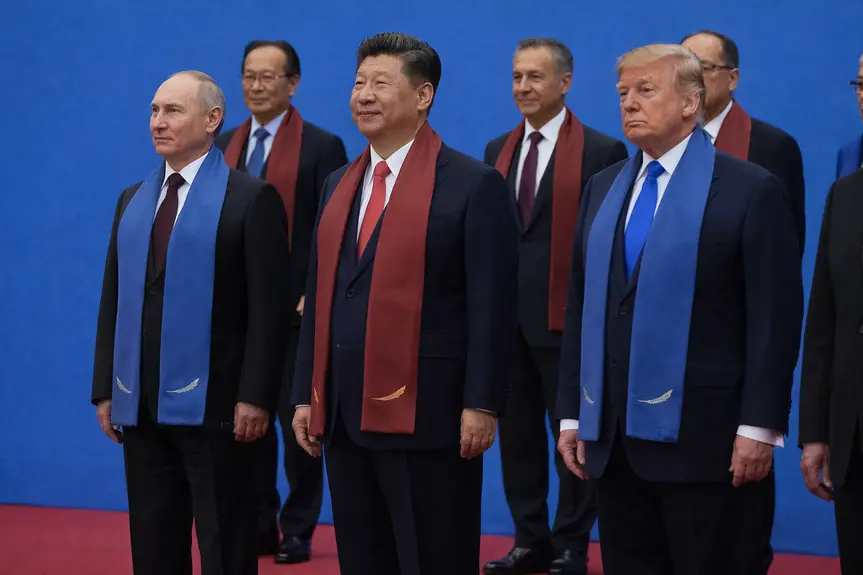
In an unprecedented gathering, President Donald Trump engaged in over an hour of dialogue with Chinese leader Xi Jinping and Russian President Vladimir Putin. The meeting, characterized as a potentially monumental historical turning point, aimed to establish guidelines for nuclear arms control and address the ongoing conflicts in Ukraine and Iran. Observers, however, expressed skepticism about the prospects for tangible progress.
Trump remarked, “We are making history. The unique positions of the United States, Russia, and China equip us to discuss how to diminish the nuclear threat globally.” As the meeting commenced, Xi reinforced the sentiment, advocating for the prohibition and destruction of nuclear weapons, emphasizing the need for a world free of such armaments. Putin, reflecting on their nations’ shared legacy as allies during World War II, underscored their responsibility in maintaining international peace.
With the expiration of the New START nuclear arms treaty between the U.S. and Russia last February, Trump expressed a desire for a renewed agreement that includes China. He noted the challenge of persuading nations to relinquish their nuclear capabilities, stating, “Once you have nuclear weapons, it’s hard to give them up.” Experts like Daryl Kimball from the Arms Control Association highlighted that while Trump’s endeavors may initiate a dialogue, they might not lead to significant breakthroughs without sustained efforts.
Significant Bilateral Discussions Amidst Trilateral Talks
Before the trilateral meeting, Trump held a separate discussion with Xi, marking their third notable interaction this year. The conversations included topics like ensuring a steady oil shipment flow through the Strait of Hormuz, a critical area amid the ongoing hostilities in Iran. Trump took the opportunity to advocate for increased agricultural exports from the U.S. to China. According to Xi, relations between the two nations have shown signs of stability and improvement during Trump’s tenure.
Additionally, Trump scheduled a one-on-one session with Putin, the first since their unproductive talks in Alaska last year regarding the war in Ukraine. He described their meeting as an opportunity for “wonderful things” to emerge or at least to begin the process. Their interaction lasted roughly 40 minutes, where Trump praised the longstanding rapport he shares with Putin, despite the recent deterioration of U.S.-Ukraine relations.
In a somewhat controversial twist, Trump announced that their trilateral meeting would also address the protection of national sovereignty from globalist organizations, including the International Criminal Court.
The Implications of Great Power Engagements
Trump’s diplomatic pursuits evoke a bygone era where powerful nations predominated discussions affecting less powerful states. Notably, he sought to negotiate without the input of Ukraine or other nations significantly invested in the dialogues, such as Germany or France. While Trump has expressed aspirations for a Nobel Peace Prize, his administration continues military engagement in regions like Venezuela and Iran.
Amid reports of friction in U.S.-China dynamics, Trump’s praise for Xi did not overshadow instances of diplomatic strain, evident when Chinese officials restricted a reporter’s access to the trilateral meeting. Despite his claims of strong ties with China, structural economic imbalances remain, with China holding significant trade surpluses against U.S. deficits.
The impending expiration of the trade truce, set for January 10, poses additional challenges, as both nations prepare for a critical juncture in their economic relationship. The ongoing rivalry over artificial intelligence advancements has also heightened tensions, evident from recent leadership changes in tech firms closely tied to both nations. As Trump navigates these intricate global scenarios, he faces the dual challenge of fostering cooperation while confronting persistent geopolitical rivalries.