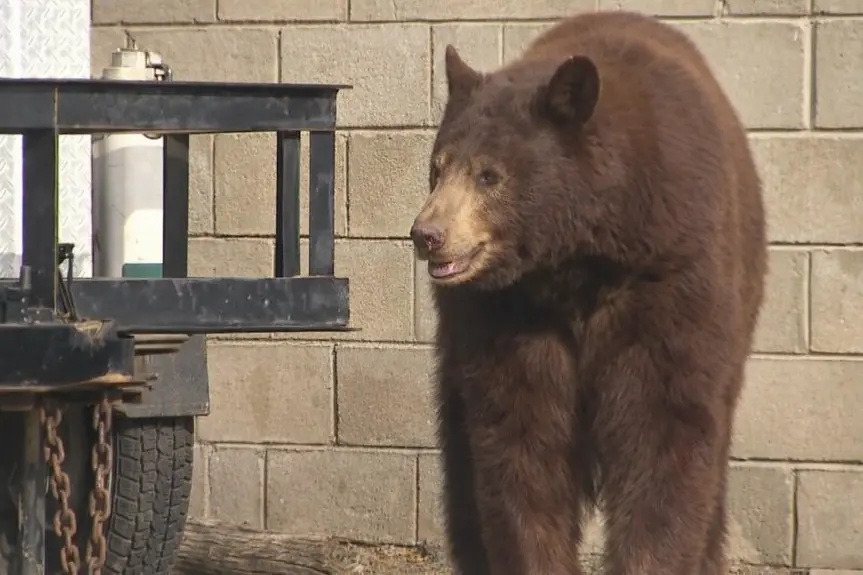
In a heartbreaking turn of events, wildlife officials have made the difficult decision to euthanize a bear involved in an incident with a woman in Monrovia, leaving her two young cubs orphaned. This decision took place despite the efforts of city officials who advocated for the bear and her cubs to be safely relocated to Angeles National Forest.
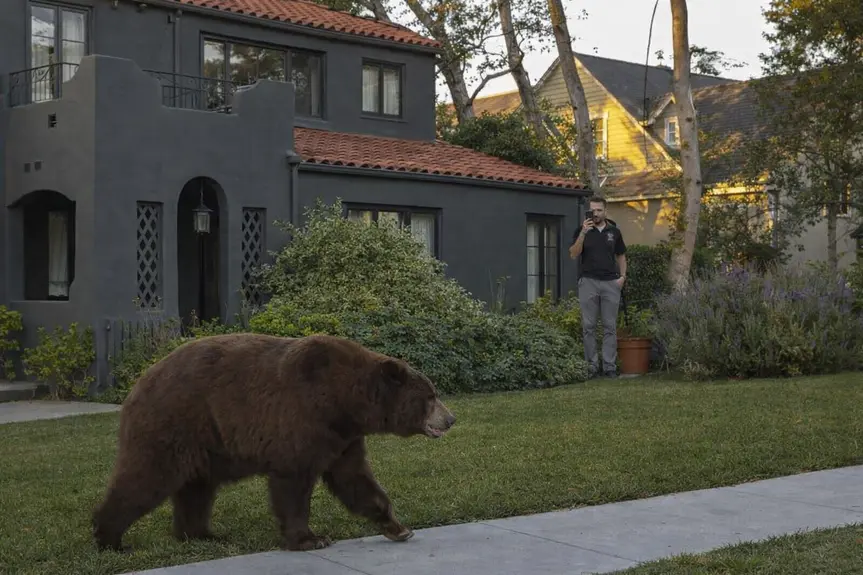
The incident occurred on a Saturday morning as a woman was walking her dog along Oakglade Drive. According to Monrovia Police Lt. Kevin Oberon, the bear swiped at her knee, prompting a neighbor to intervene and scare the bear away. Fortunately, the woman sustained only minor injuries and received appropriate care.
Monrovia City Manager Dylan Feik shared the unfortunate update on Tuesday, revealing that he had been informed by a representative of the California Department of Fish and Wildlife (CDFW) that the mother bear had been euthanized. Feik expressed his disappointment and stated that the City Council had formally requested the bear’s relocation, but the ultimate decision rested with state authorities.
Concerns Over Bear Conflicts
Feik explained that by the time city officials contacted the CDFW regarding relocation, the decision to euthanize the bear had already been made. This tragic decision followed a pattern of increasing bear encounters in the area, especially after a similar incident in June where another bear was euthanized following numerous break-ins in nearby Sierra Madre.
The DNA from this bear matched that of the earlier incident, leading officials to conclude that the bear posed a continued risk to public safety. CDFW guidelines allowed for the euthanization due to the bear’s involvement in two injury-related events.
After capturing the mother and her cubs, CDFW confirmed plans to release the healthy young cubs into suitable wildland areas. Despite this hopeful news, the community’s response to the euthanization has been one of anger and sadness. Many residents voiced their concerns, emphasizing the need for more protective measures for wildlife as human encroachment continues to invade natural habitats.
Growing Bear Population and Community Response
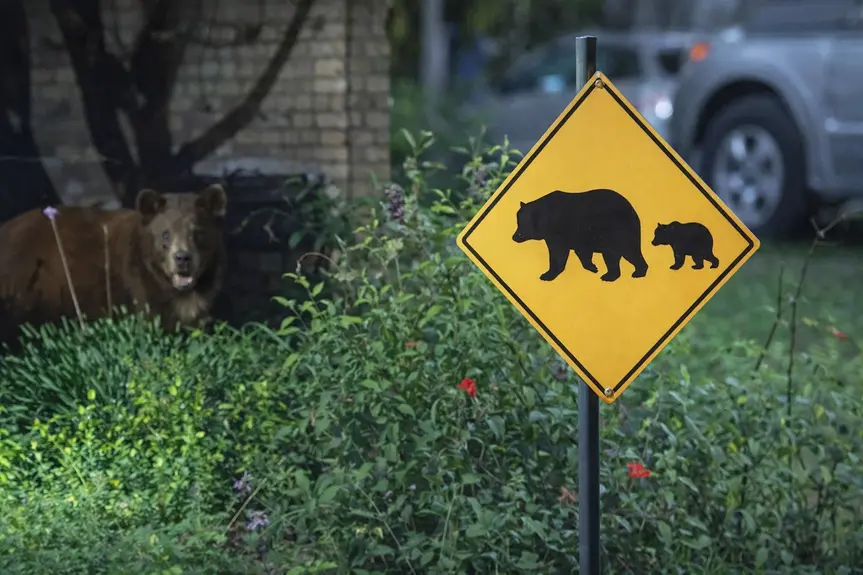
The growing number of bears wandering into urban neighborhoods reflects broader trends in wildlife-human interactions, particularly in light of habitat destruction from wildfires. The Eaton fire in Altadena, in particular, has been cited as a significant factor driving bears into residential areas in search of food and shelter.
Last summer, California witnessed a record surge of bear encounters, with Sierra Madre reporting a staggering 41 incidents of bears entering homes—more than triple the occurrences of the previous year. With an estimated population of around 60,000 black bears, California harbors the largest bear population in the contiguous United States. These majestic animals have been part of the Southern California landscape since 1933, when bears were relocated from Yosemite National Park.
In a time where ecological balance is more critical than ever, the sorrowful fate of this bear and her cubs serves as a poignant reminder of the challenges faced by both wildlife and human communities as they adapt to ever-changing environments.