Overview of Recent Legal Developments
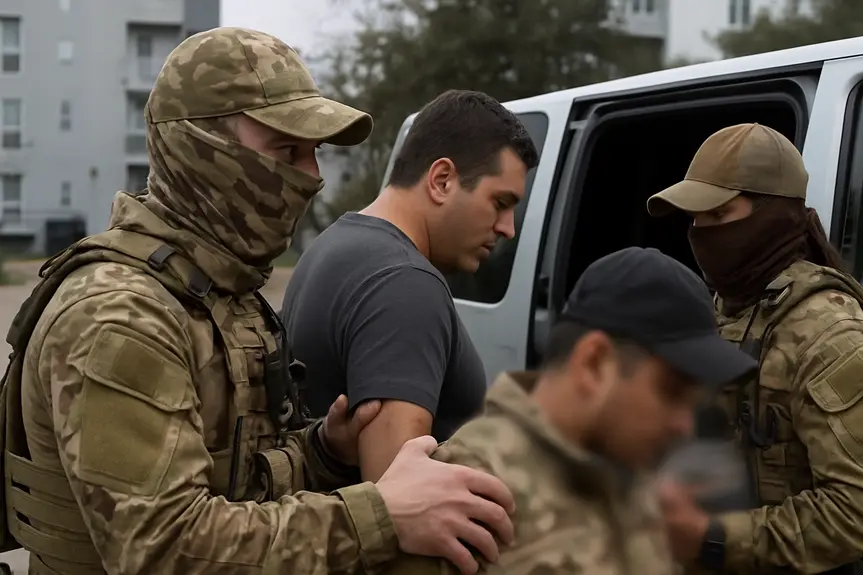
A federal judge in Los Angeles has intervened in a legal dispute regarding the enforcement of a law that would restrict when federal immigration agents are permitted to wear masks during operations in California. This ruling blocks the state from enforcing the mask ban, while affirming another law that mandates law enforcement officials display their name or badge number while on duty.
Details of the Court Ruling
Senior U.S. District Judge Christina Snyder rejected arguments made by the Trump administration, which contended that agents of U.S. Immigration and Customs Enforcement (ICE) required the ability to wear masks to avoid potential harassment or doxing—defined as the public release of personal information. However, Judge Snyder noted that California’s No Secret Police Act seemingly discriminates against federal agents, as the law’s provisions do not extend to local or state law enforcement officials.
Judge Snyder highlighted that the law treats federal law enforcement officers differently than their state counterparts, an aspect that raises constitutional questions. Conversely, the judge upheld the No Vigilantes Act, which compels most law enforcement officers to visibly display their identification while performing their duties. The intent behind these new laws, adopted following controversial immigration enforcement actions involving masked federal agents in Southern California, was to enhance accountability.
Reactions and Implications
U.S. Attorney General Pam Bondi has characterized these laws as unconstitutional, arguing that they place federal officers at risk. In September, the U.S. Department of Justice initiated legal action against California and its officials, claiming these new regulations represent an unconstitutional effort to limit federal law enforcement capabilities.
California now stands as the first state to explicitly forbid federal law enforcement agents, including those from ICE, from concealing their identities, thereby requiring non-uniformed agents to present identification information clearly during any enforcement activity. While the laws were scheduled to take effect on January 1, their implementation is currently on hold pending the resolution of the legal challenges.
Governor Gavin Newsom expressed support for the judge’s ruling, framing it as a victory for civil rights and accountability. He underscores the importance of identification for law enforcement officials to mitigate the risks associated with anonymity in their roles. The ruling also permits state legislators to amend the No Secret Police Act, although it remains uncertain whether Governor Newsom will endorse any forthcoming revisions.
Fortunately, the implications of this case extend beyond immediate enforcement practices and address broader principles regarding the balance of state versus federal authority, particularly in matters of law enforcement and civil rights.