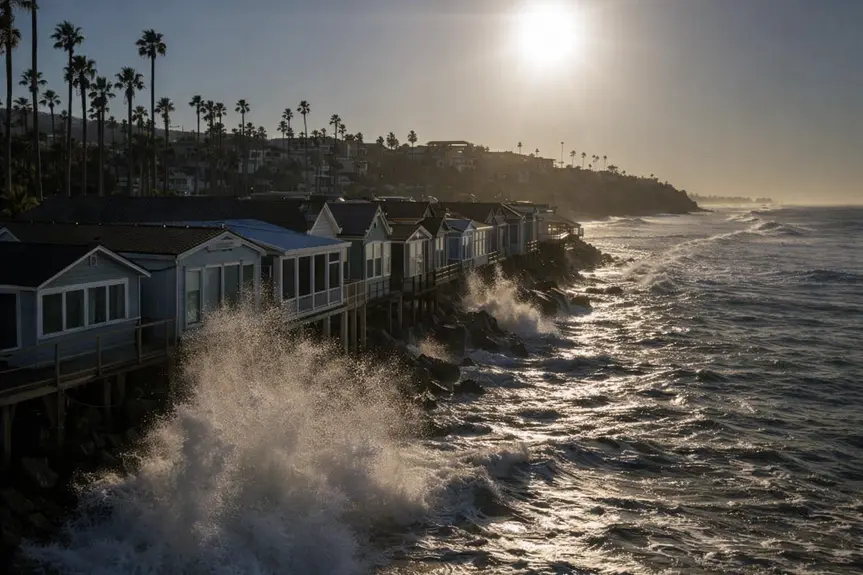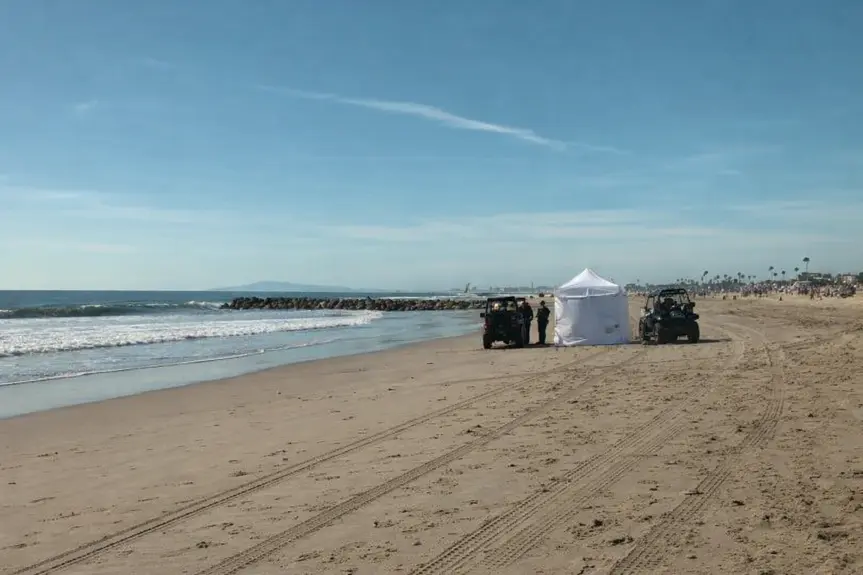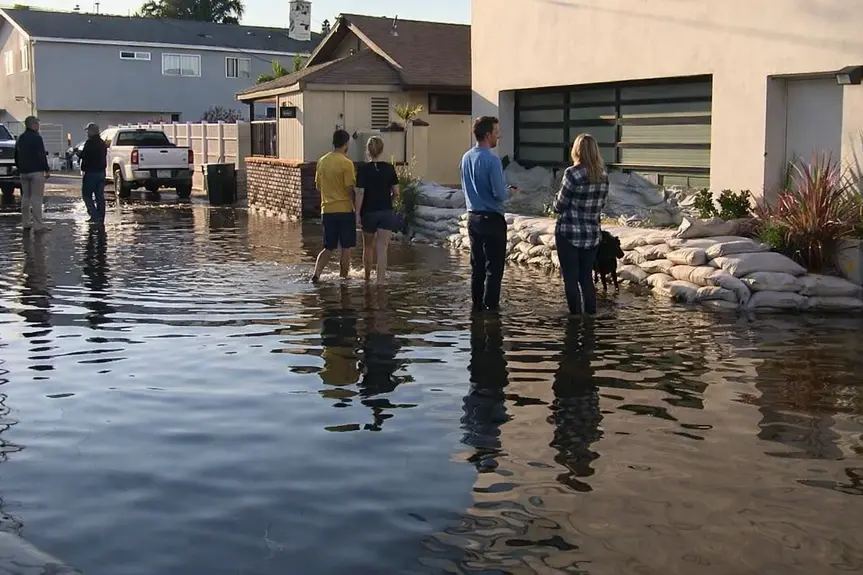
Families gathered at Hermosa Beach, enthused for a day of fun, were met with the imposing sight of colossal king tides that threatened to wash away the shoreline. The closures of the pier only added to the drama of a Thanksgiving Day filled with both excitement and caution.
Finding Fun on the Sand
With the ocean too daunting to swim in, creativity took over. Instead of braving the waves, children and adults alike took to the sandy hills, transforming them into makeshift sledding slopes using sleds and boogie boards.
Local mother voiced her concern, stating, “We have to keep our kids away from the water because it is a little scary out there.” Her son, full of energy, shouted, “Rude!” clearly frustrated by the parental restrictions. Meanwhile, another little girl chimed in with a complaint about their ban from swimming, stating, “It’s not fair.” Yet, laughter erupted moments later as they slid down the sandy slopes, a chorus of joy echoing, “Whoooooooo!”
Despite the closures and warnings issued by the city earlier in the day, the sun-soaked weather, with temperatures soaring into the 80s, attracted crowds to the beach, eager to embrace the unusual Thanksgiving spirit.
The Impact of King Tides
King tides, periodically observed, are the highest tides experienced throughout the year. As sea levels continue to rise, these tides increasingly threaten coastal areas, leading to flooding and erosion. The nickname ‘king tides’ refers to these notably elevated tides that often coincide with astronomical events.
Predictions for an El Niño event in 2026 are expected to exacerbate coastal conditions, intensifying the already formidable impacts of king tides. This alignment of the sun, moon, and Earth creates a stronger gravitational pull, resulting in the highest tides of the year, which many coastal areas now experience more frequently than in the past.
Historically, king tides visited certain coastal regions just once or twice a year, but due to climate change accelerating sea level rise, many areas now see them more regularly. This shift is driving concerns as melting glaciers and warming seas contribute to rising waters, making coastal flooding a growing reality for communities all over.