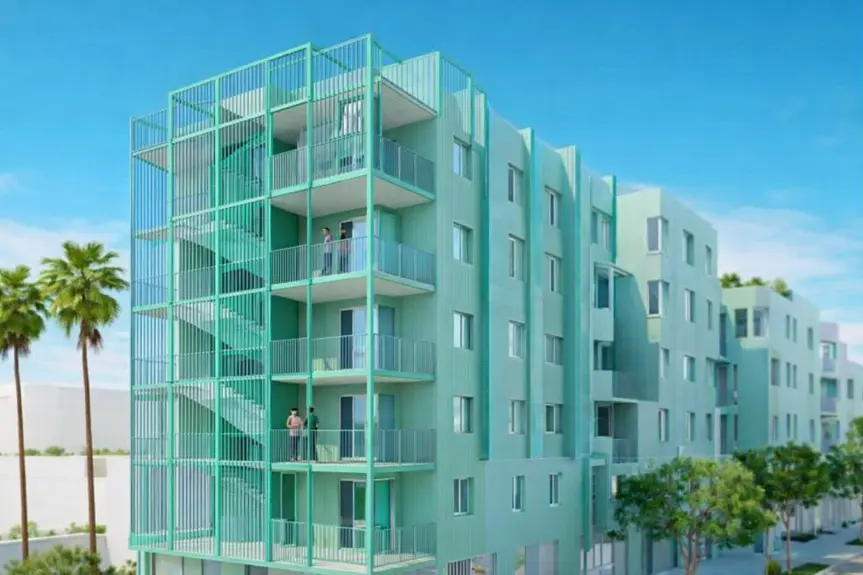
A vacant pet store on Wilshire Boulevard has recently turned into a focal point for controversy as discussions heat up regarding its transformation into an eight-story affordable housing complex. This project is set to provide 80 affordable housing units for the community, supported by the City of Santa Monica and spearheaded by the Hollywood Community Housing Corporation, all at an estimated cost of $77 million.
Community Concerns and Opposition
Local residents are raising their voices against the redevelopment, citing worries about its potential effects on the neighborhood dynamics. “I don’t think it should happen,” expressed one concerned neighbor. Others, like Jay Johnson, voiced deeper fears: “We’re scared. We are really scared.” These sentiments highlight a broader apprehension among residents regarding the implications of such a substantial project.
Critics have also begun questioning the financial aspects of the plan. Johnson remarked, “All in the name of trying to help the homeless at an exorbitant price, when there are many other workable solutions.” Ashley Oelsen brought up issues concerning the city’s financial health, stating, “We’re steps away from bankruptcy. Why are we allocating so much money and funding in the method and manner in which we’re doing so?” Additionally, Stephanie Inouye challenged the rationale behind the property acquisition, noting the building was purchased for $6 million even while it was listed at $4 million.
City Officials Respond
According to documents revealed by local news, $25 million of the project’s funding is projected to come from a state grant aimed at assisting fire victims. The housing is intended for a diverse group, including Section 8 tenants, seniors, and individuals who have lost their homes to fires. Inouye pointed out, “There’s 3,000 seniors about to become homeless in Santa Monica. This neighborhood welcomes them. The problem is you’re going to mix seniors with tri-morbid people,” raising concerns about the sustainability of this housing strategy.
In defense of the initiative, a city spokesperson described it as crucial for ensuring affordable housing and enhancing the overall quality of the community, emphasizing the necessity of such projects. Councilman Jesse Zwick addressed allegations of conflict of interest by highlighting the absurdity of the claims related to his support for the housing project. Mayor Caroline Torosis affirmed her commitment to advocating for affordable housing, saying, “Santa Monicans are calling for a more affordable city. They elected me to be their voice and to fight for more affordable housing, and that’s exactly what we’re doing.”
City officials contend that the development aligns with a larger strategy to fulfill state housing requirements, which necessitate nearly 8,900 new housing units in Santa Monica, approximately 69% of which must be affordable. They also pointed out that the project underwent a transparent approval process that involved community meetings and received revisions based on public feedback.
Despite the backing from city officials, community members like Oelsen are advocating for a halt to the project, citing a lack of transparency and widespread community outrage. “Everyone is asking for a pause to take place,” she stated. As plans for demolition and development advance, those opposed to the project fear that time is running out to reconsider or stop the controversial plans.