California’s ambitious high-speed rail initiative faces a significant financial hurdle as it may run out of funds by December 2027. This grave warning comes from Inspector General Benjamin Belnap, who highlighted a staggering $9.5 billion funding shortfall over the next five years.
Current Funding Crisis
In a detailed review of the project’s 2026 business plan, Inspector General Belnap’s office revealed that while the High-Speed Rail Authority has identified around $39.3 billion in long-term funding sources — including $1 billion annually from Cap-and-Invest revenues — these funds aren’t arriving in time to meet the demands of peak construction. The report emphasizes that without securing new financing, the existing cash resources could be fully depleted by the end of 2027, necessitating $2.2 billion in fiscal year 2027-28 alone to maintain construction schedules.
In response to this anticipated funding gap, which spans fiscal years 2027-28 to 2031-32, state officials are exploring various avenues to raise capital. Options on the table include internal borrowing by the state, issuing revenue bonds, or pursuing private investments. However, any borrowing will incur additional interest costs, estimated between $3.6 billion and $6.6 billion, which have not been factored into the authority’s official $35.7 billion estimate for the Central Valley rail line.
Operational Challenges and Future Prospects
Further compounding the financial woes, the Inspector General found that current cost estimates fail to address a $1.2 billion gap related to contingency budgets, and an additional $1.7 billion is needed for essential infrastructure under current local agreements. Strikingly, recent cost savings seem to stem from reducing the scope of the project, rather than achieving greater efficiency.
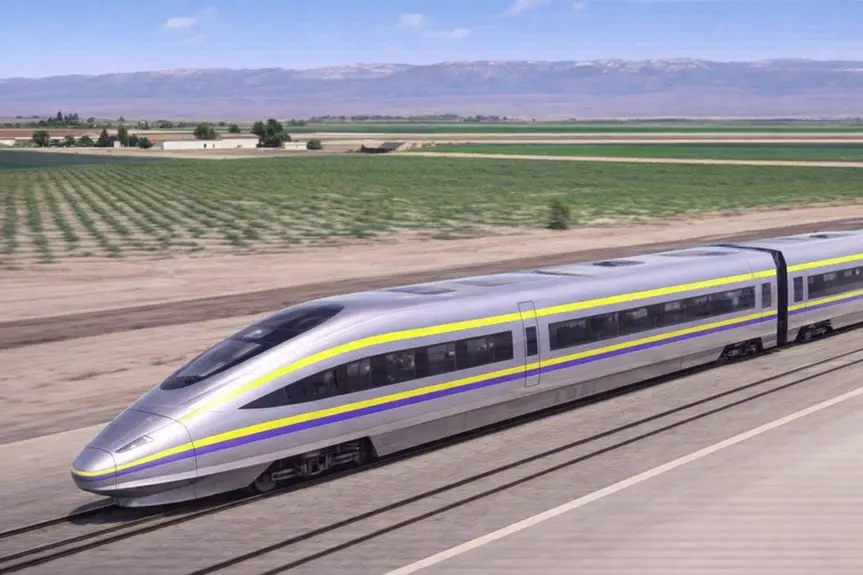
The Authority’s revised strategy has shortened the Merced-to-Bakersfield corridor from 171 miles to 162 miles, with plans to relocate the Merced station to a suburban area, while construction of tracks north of downtown Bakersfield has been temporarily paused. The project has also faced setbacks in procurement, with the number of trainsets ordered dropping from six to three and an adjustment in delivery schedules pushed back to February 2030.
Insufficient clarity surrounds the Authority’s ability to secure long-term funding, especially after losing out on $4 billion in federal support and the inability to attract private investment. Inspector General Belnap has criticized the Authority for its lack of transparency, stating in a correspondence to lawmakers, “The Authority has obscured basic facts about the project, hindering lawmakers’ ability to provide effective oversight.” With this backdrop, the Authority has acknowledged the need for shared progress while relocating into its track-laying phase.
Looking ahead, the Inspector General has advised adopting stringent policies for annual reporting to ensure proper oversight and transparency. Upcoming legislative hearings by the Assembly Transportation Committee will delve into the concerning $9.5 billion funding gap and consider options for internal borrowing.