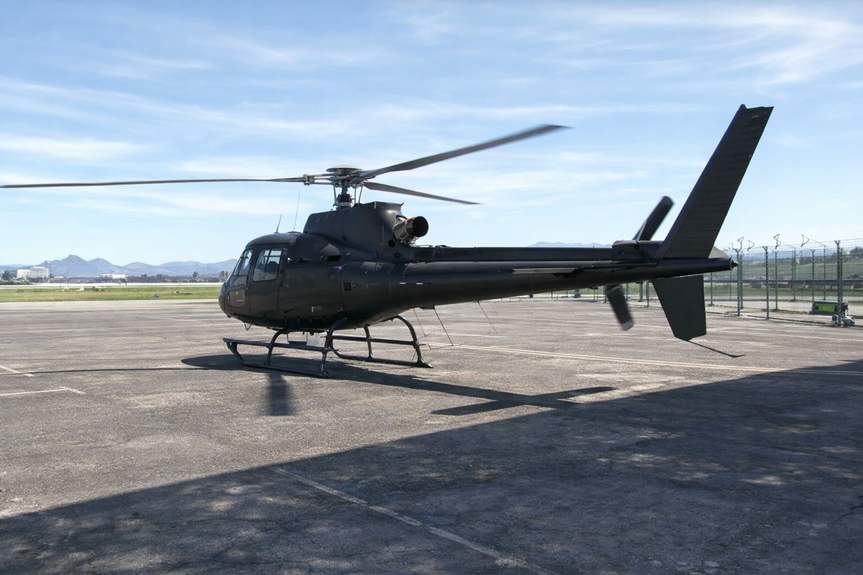
In a surprising move, helicopter operations near Los Angeles International Airport (LAX) have come to an abrupt halt. The Federal Aviation Administration (FAA) has implemented a blanket restriction on all helicopter flights, affecting not only private pilots but also crucial public safety agencies like police, fire departments, and emergency medical services.
The Impact on Emergency Services
Jorge Gonzalez, the chief operating officer of Helinet and a former helicopter pilot for the LAPD, expressed his bewilderment over the situation. He stated that the FAA has denied every request from helicopter operators wishing to enter or even cross LAX airspace. “The controlled area for the LAX airport has been restricted to all helicopter operations. Period,” Gonzalez remarked. This has created an unprecedented no-fly zone that covers a significant part of central Los Angeles.
The restrictions are particularly concerning for emergency services. An official message circulated among LAPD units alerted officers that air support would not be available in certain areas due to the airspace restrictions. The LAPD confirmed the ban, noting that the FAA did not provide any explanations or timelines regarding the duration of these limitations.
Gonzalez further highlighted the ramifications for medical flights, including organ transport missions. He stated, “Imagine human organ transplants and transports – there’s a shelf life on those. That’s the reason they use helicopters – to expedite the delivery. The longer the organ is out, the more the risk of losing that organ.” This situation amplifies the concern for patients relying on timely medical interventions.
Understanding the FAA’s Decision
While the FAA has refrained from offering interviews, they did release a statement indicating that these restrictions are part of a nationwide review aimed at ensuring safety around airports with mixed types of air traffic. They are currently evaluating the need for Visual Flight Rules (VFR) operations near LAX, suggesting that air traffic controllers will be increasingly vigilant about prohibiting such operations based on traffic conditions.
Despite this official rationale, Gonzalez pointed out that all requests he has encountered have been systematically denied. Interestingly, historical records show no instances of a helicopter colliding with an airplane in LAX airspace. He remains hopeful, saying, “Maybe in the near future we’ll get some relief, maybe some new parameters, but not a complete ban from the airspace.” As the community grapples with these new restrictions, the priority remains safety and accessibility for both emergency services and the public.