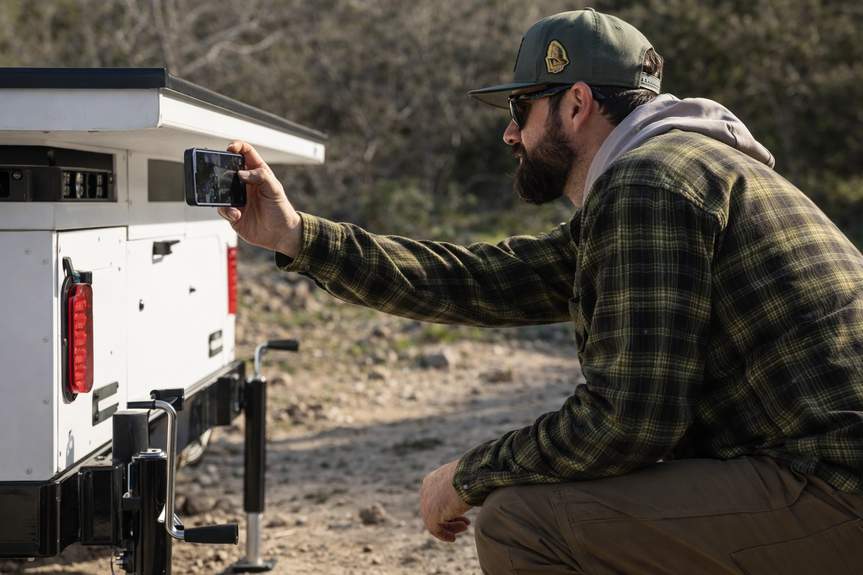
While driving down a rugged road on the outskirts of San Diego County, James Cordero stumbled upon what appeared to be an abandoned trailer. His curiosity led him to discover a concealed camera, part of a sprawling surveillance network that records the license plates of every vehicle passing through this quiet stretch near the California-Arizona border.
Cordero, a 44-year-old local resident, has uncovered numerous similar cameras tucked away in trailers and construction barrels along border routes in San Diego and Imperial counties. These devices have been spotted near Old Highway 80 by Jacumba Hot Springs, outside the Golden Acorn Casino in Campo, and along Interstate 8 toward In-Ko-Pah Gorge.
The Rise of Surveillance Cameras
The increased presence of these cameras coincided with California granting permits to the Border Patrol and other federal agencies to install license plate readers on state highways, a move initiated during the latter months of the Biden administration. Currently, it is estimated that as many as 40 cameras are feeding data into databases linked to the Trump administration while the state grapples with concerns over an extensive federal deportation program.
This surveillance initiative has sparked an array of concerns among privacy experts, civil liberties advocates, and humanitarian workers. They argue that California should not facilitate a program that they consider a significant intrusion into the lives of innocent individuals. Many critics emphasize that this program may also violate state laws designed to protect resident’s privacy.
Supporters of the cameras contend that they aid law enforcement in promptly identifying individuals suspected of serious crimes. They argue that the devices can help unveil patterns in drug and human trafficking and may assist in locating missing persons, including vulnerable populations like children.
“If you’re not doing anything illegal, why worry about it?” observed longtime Jacumba resident Allen Stanks, age 70, suggesting that privacy concerns might be overblown.
However, some locals are beginning to connect the dots between these cameras and unusual interactions with Border Patrol agents. In one instance, an officer questioned a grandmother about her visits to a casino, raising alarm among community members about the implications of such surveillance.
Humanitarian Efforts Under Scrutiny
James Cordero, who dedicates his days off to leading volunteers in providing water, food, and clothing for migrants, expresses his worries about the implications of being monitored. He fears for the safety of the volunteers who join him in these humanitarian efforts.
“I’m not concerned for myself so much, but for our volunteers,” Cordero remarked. “I don’t want them subjected to being tracked or questioned.” Historically, federal authorities have gone after volunteers from humanitarian groups, such as during the previous Trump administration, where individuals faced charges for aiding migrants.
Information surrounding the use of license plate readers by Border Patrol is scarce. The Department of Homeland Security released a 2020 report regarding this technology but provided no exact details about their deployment. Cordero has expressed frustration at the lack of transparency concerning these surveillance measures.
As more advocacy groups rally against the covert installation of these cameras, a coalition of over 30 organizations recently urged Governor Gavin Newsom and the California Department of Transportation to rescind permits for these devices. Notably, the Electronic Frontier Foundation has taken steps to map and highlight the widespread use of these hidden license plate readers along border highways, arguing they violate California’s 2016 legislative protections against unwarranted data collection.
Cordero highlights the often unacknowledged consequences of this surveillance: “People are literally dying out here.” Through his nonprofit, Al Otro Lado, he strives to save lives by providing critical resources to migrants traversing perilous routes. He insists that their efforts are purely humanitarian and intended to prevent fatalities.
The California Department of Transportation confirmed that it has authorized permits for eight license plate readers from federal entities. However, they emphasize they do not oversee the management or specific use of these technologies.
Meanwhile, other law enforcement bodies within California have also been sharing license plate data with federal agencies involved in immigration enforcement, despite state laws that prohibit such actions.
Through all of this, it’s evident that residents like Cordero are not just battling bureaucratic oversight; they’re fighting to ensure the dignity and safety of vulnerable communities along the border. As surveillance expands, discussions about privacy, safety, and humanitarian aid are increasingly important in navigating our complex reality.