Classic cars like the stylish Impala, vibrant Monte Carlo, and powerful T-top Trans Am represent a significant piece of California’s automotive history. Unfortunately, many of these gems have been sitting idle in garages due to the rigorous smog check requirements that they’ve struggled to meet.
Jay Leno Champions the Cause
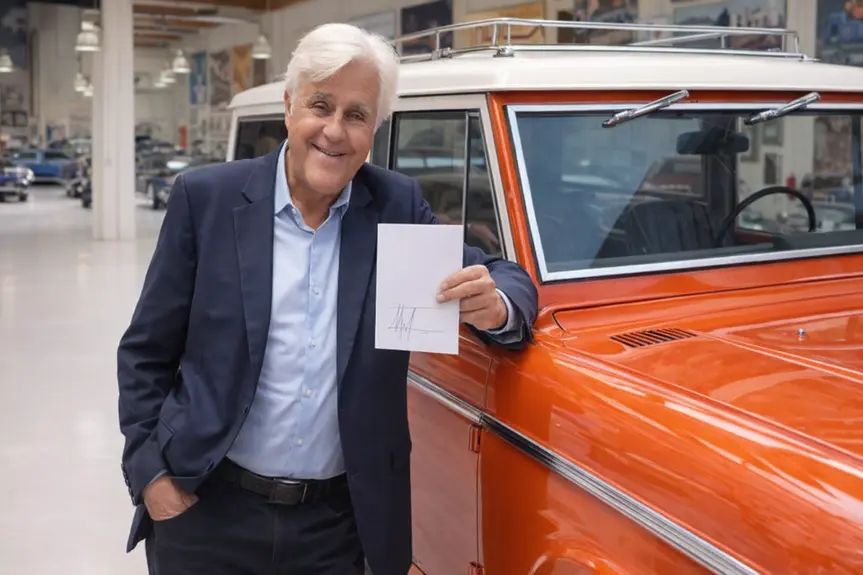
Car enthusiasts have rallied for years, urging for relaxed emissions regulations for collector vehicles, arguing that these classic models are mainly used for special events and gatherings. A significant boost to this movement came from none other than comedian and car collector Jay Leno, who boasts an impressive collection of over 150 vehicles. Recently, he made headlines when California Governor Gavin Newsom visited his garage to sign Senate Bill 1392, commonly known as Jay Leno’s Law, which aims to broaden the exemptions for smog checks on certain collector cars.
This new legislation will gradually phase in smog check exemptions for collector cars manufactured from 1976 through 1985 that are not utilized as a primary means of transport. Currently, vehicles before the 1975 model year are exempt from smog checks, and under the new rules, from January 1, 2028, cars built before 1981 will join this exempt group. Eligibility will expand annually, culminating in 2033 when cars from the 1985 model year will be included as eligible.
Understanding the Exemptions
To qualify, owners will need to demonstrate that their classic car is not regularly used for daily transportation, which can be proven through collector car insurance or by showing that the vehicle is driven less than 1,000 miles each year. The exemptions aim to cover cars primarily used for shows, parades, charity events, and exhibitions.
According to Senator Dave Cortese, who co-authored the bill, “California can preserve clean air while simultaneously acknowledging the historical and cultural significance of collector vehicles.” The smog check requirement can be a daunting aspect of maintaining vintage cars, especially since not all gas stations offer the necessary emissions testing.
Speaking to supporters in August, Leno expressed frustration over the situation, stating, “You have an old car, it’s been legal your whole life, and now it’s illegal because you can’t find a station to do the emissions test.” This situation thrust many collectors into a legal grey area, fearing repercussions simply for wanting to enjoy their cars.
Furthermore, even when collectors manage to find a testing location, passing the smog check is not guaranteed. Getting classic cars to comply with modern emissions standards is notoriously difficult due to aged emissions systems and the scarcity of replacement parts.
The new exemptions represent a significant win for the lowrider community, which voiced overwhelming support for the bill with over 1,700 letters in favor. Lowriders, cherished in California’s Chicano culture, feature distinct modifications that allow them to cruise low to the ground. While the lowriding culture has remained vibrant over the years, its resurgence recently caught the attention of more enthusiasts.
During the signing event at Leno’s garage, Governor Newsom also approved Assembly Bill 2541, which introduces a special license plate designed to honor California’s lowrider legacy. Assemblymember Mark González emphasized the deep cultural significance of lowriders, stating, “Lowriding is more than a car; it is cultura, it is art, it’s family, and it is a powerful expression of Chicano and Latino pride.”
While pushing for Jay Leno’s Law proved challenging, especially amid opposition from environmental and public health advocates concerned about increased emissions, supporters successfully communicated that the law’s impact would be limited. According to data, the vehicles falling under this exemption would represent less than one percent of registered cars in California.
With significant bipartisan backing, State Senator Shannon Grove, who co-authored the bill, celebrated its passage, appreciating the vital community support from car enthusiasts, mechanics, and families proud to pass these vehicles down through generations.