Demonstrators Honor Those Affected by ICE Actions
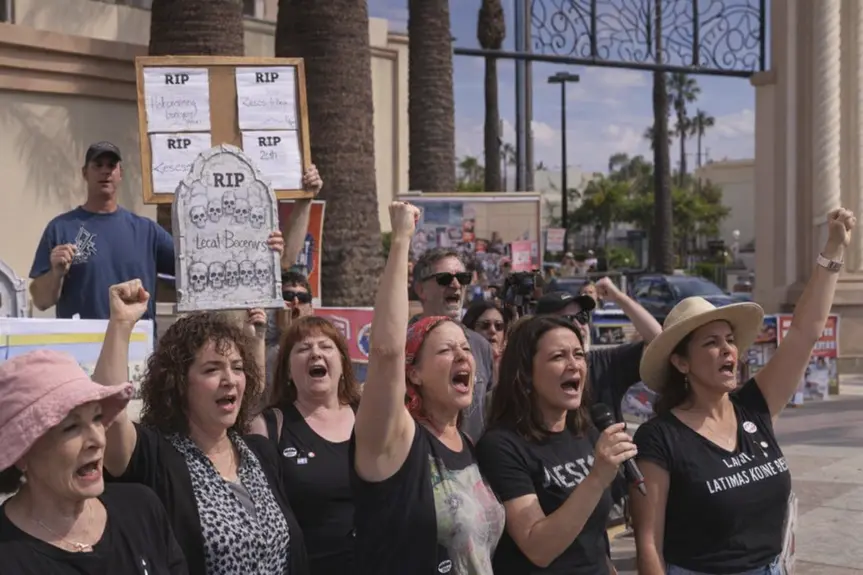
On a recent Saturday morning, around 50 passionate individuals gathered in Pasadena as part of a national movement aimed at commemorating lives lost due to immigration enforcement actions and conditions in detainment centers during the previous administration. This gathering aimed to shed light on a serious issue that continues to affect communities.
Participants wore makeshift memorials around their necks, featuring smiling faces and names tied to some of the 75 individuals who have tragically died since January 2025. Among them was local resident Roberto Carlos Montoya Valdez, a 52-year-old who lost his life while attempting to escape immigration officers during a raid at a Home Depot in Monrovia last year.
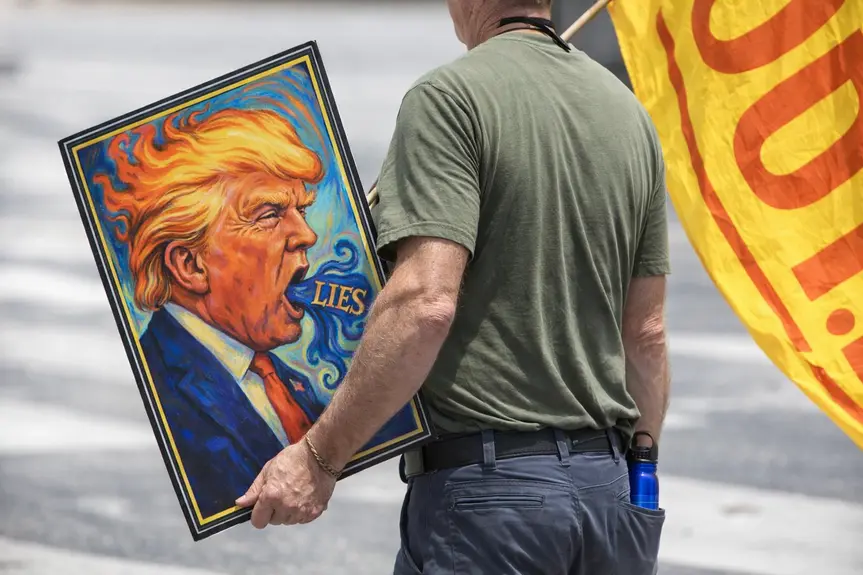
The demonstrators, part of a collective known as the San Gabriel Foothills Indivisible group, waved American flags and displayed powerful slogans such as “No ICE No War” and “Stop ICE Murders.” Betsy Hanger, one of the organizers, addressed the crowd through a megaphone, rallying for support by encouraging passersby to honk in solidarity.
Shedding Light on the Harsh Realities of Immigration Enforcement
Researchers highlighted concerning statistics indicating that formal businesses within half a mile of known enforcement sites saw a drop of 46,000 customer visits in just two weeks following immigration actions, equating to a staggering $3.16 million loss in revenue. This underscores the far-reaching consequences of such enforcement on local economies.
As the crowd demonstrated, honks of support rang out from passing cars, resonating their discontent with current policies. Organizer Andra Clarke held banners, one side reading “Neighbors Say ICE Out,” while around her neck, she bore a picture of Francisco Gaspar-Andrés, who died in a Texas detention facility last December. Clarke has been a fixture at this intersection, gathering every Saturday since March to raise awareness.
The day of the protest fell on a heartbreaking occasion; the group remembered Lorenzo Salgado Araujo, who was killed by ICE agents while transporting his construction crew, and Johan Sebastian Guerrero, who met a similar fate during a traffic stop. Clarke emphasized that the narrative surrounding enforcement actions often misrepresents the reality, with vulnerable communities, particularly people of color, facing disproportionate targeting.
“It’s like, again? It just doesn’t end. It feels like it never ends — the evil,” she expressed, highlighting the emotional toll these events have on communities.
With a sobering reminder, the organizers conducted a moment of silence for the victims. The atmosphere was somber yet resilient as attendees embraced the importance of collective action.
Leticia Lopez, a 65-year-old resident from South Pasadena, shared her discomfort at the news of ongoing arrests. “It gets me to the core,” she said, reflecting on her family’s history of forced repatriation and how modern-day events echo past traumas. “When my son goes out, I worry about his safety.”
The demonstration was part of a broader wave of protests occurring nationwide, coinciding with a significant event in Minnesota where activists clashed with law enforcement over immigration policies.
Another poignant moment came later in the day, when activists planted dozens of white crosses outside a local Home Depot. Each cross bore photos of the deceased, many of whom were men, with flowers laid at their bases in remembrance. Among the images was that of Keith Porter Jr., a victim of an off-duty ICE officer in California.
“Are we going to wait until 70 more die to do something?” Marlom Portillo, an educator, questioned while showcasing the crosses. Portillo’s call to action resonated among attendees, urging them to remember the lost lives and the need for continued advocacy.
As the gathering wrapped up, demonstrators displayed signs emphasizing human dignity and community safety. Individuals like Sheri Lochner, part of East Pasadena Community Defense Corner, voiced their discontent, recalling witnessing ICE agents detain local workers during a prior raid.
Through these heartfelt expressions of solidarity and resistance, the Pasadena protest served not only as a remembrance but also as a rallying cry for justice and change amidst a turbulent landscape of immigration enforcement.