A Major Legal Challenge Dismissed
A federal judge has ruled against a lawsuit brought by the Trump administration that sought to invalidate Los Angeles’ sanctuary city ordinance, deeming it “illegal.” In a decisive weekend ruling, U.S. District Judge Fernando M. Olguin supported the city’s motion to dismiss the complaint, which criticized the ordinance for supposedly infringing on federal authority.
Judge Olguin stated that the government’s claims were not strong enough to prove that the ordinance violated what’s known as the intergovernmental immunity doctrine. He clarified that the law in question does not regulate the federal government outright but instead focuses on governing the actions of city officials and agencies.
Reactions to the Ruling
This ordinance does not prevent the federal government from conducting deportations; nonetheless, it represents a clear message from City Hall in support of its immigrant residents.
While neither the White House nor the Justice Department provided immediate comments, the dismissal was celebrated by L.A. City Attorney Hydee Feldstein Soto as a significant legal victory. “This order reinforces the well-established principle that local governments have the authority to decide how to use their personnel and resources,” she remarked.
Moreover, L.A. Mayor Karen Bass declared that the ruling confirms the city’s commitment to safeguard immigrants and all Angelenos from undue federal scrutiny. “We know they could appeal, and we will be ready. We will always fight back when anyone attacks L.A.,” she said, signaling the city’s readiness for ongoing legal battles.
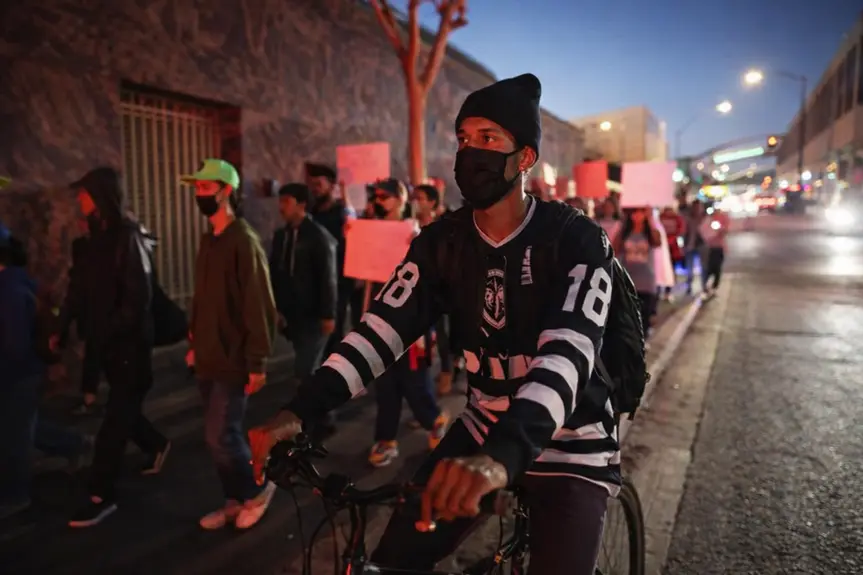
The lawsuit, originally filed in California’s Central District federal court by the Trump administration last June, claimed the country was in the midst of an “illegal immigration crisis” and suggested that local sanctuary city policies hampered federal efforts to manage immigration in areas like Los Angeles. Protests erupted in Southern California as immigration enforcement actions intensified, leading to thousands of arrests.
Additionally, the lawsuit indicated that the situation was critical enough that the federal government felt it necessary to deploy both the California National Guard and U.S. Marines to restore order, framing a direct conflict with federal immigration authorities as an inevitable result of the sanctuary city law.
Although the sanctuary law was proposed prior to Trump’s election, its finalization came amidst the political shifts following his victory in November 2024. Under the ordinance, city employees and properties are prohibited from being utilized for immigration enforcement tasks, apart from cases involving serious crimes. It further prevents city staff from initiating inquiries regarding an individual’s immigration status, allowing such questions only when required to deliver city services.
Feldstein Soto emphasized that the intention of both the ordinance and LAPD’s associated policies is to create an environment where victims and witnesses of crimes feel secure to report incidents without fear of immigration repercussions. “It does not obstruct or impede lawful federal immigration enforcement operations,” she affirmed, reiterating the law’s supportive role towards community safety.