Reviving the 70s Spirit at La Brea Tar Pits
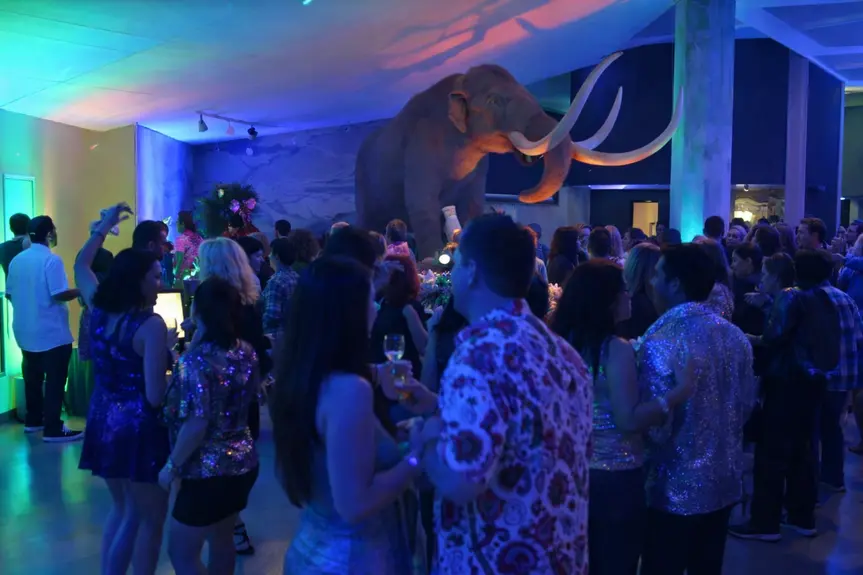
The La Brea Tar Pits hosted an unforgettable farewell party that took attendees back to the vibrant 1970s, celebrating nearly half a century of its captivating exhibits. The event, aptly named “Last Dance at La Brea Tar Pits,” saw hundreds of excited visitors come together to honor the museum before it temporarily closes its doors for an extensive renovation over the next two years.
As part of the festivities, guests were encouraged to don their best 1970s outfits for a lively costume contest, turning the event into a colorful, retro-themed gathering complete with music, dancing, delicious food, and drinks. The atmosphere buzzed with joy as attendees strolled through the unique exhibits, raising a glass amidst the impressive displays of mammoths, mastodons, and saber-toothed cats, all before these relics take a well-earned hiatus.
What’s Next for the La Brea Tar Pits?
Lori Bettison-Varga, the president and director of the Natural History Museums of Los Angeles County, encouraged everyone to visit before the museum closes its doors for renovation on July 7. “Come visit now. Last day July 6, and then, of course, when we reopen, we look forward to telling the La Brea Tar Pits story in a way that people understand — past, present and future, what it means,” she stated, underscoring the importance of this beloved museum.
The forthcoming $240 million renovation is poised to transform the George C. Page Museum into a modern wonder. Planning reveals exciting new exhibition galleries, visible research laboratories, enhanced storage for collections, a theater, and even a stunning rooftop terrace that offers sweeping views of the tar pits and the surrounding park. Importantly, while the renovation enhances accessibility and preserves the museum’s cherished historic features, it aims to elevate the overall visitor experience.
Adding to the development, a state-of-the-art facility known as the Samuel Oschin Global Center for Ice Age Research will be established, emphasizing transparency in fossil preparation and scientific work, bringing audiences closer to the research process.
Even during renovations, the museum’s mission continues. Paleontologists will remain active, extracting fossils and conducting valuable research, ensuring that the legacy of the La Brea Tar Pits stays alive. Educational initiatives will persist as well, with behind-the-scenes tours, engaging presentations, and the La Brea Tar Pits Mobile Museum actively visiting schools and community events throughout Los Angeles County.
With plans for a grand reopening in 2028, just in time for the Los Angeles Olympic and Paralympic Games, the reimagined campus promises to enrich the cultural landscape of California and continue captivating visitors for generations to come.