Two Rare Corners of Attraction
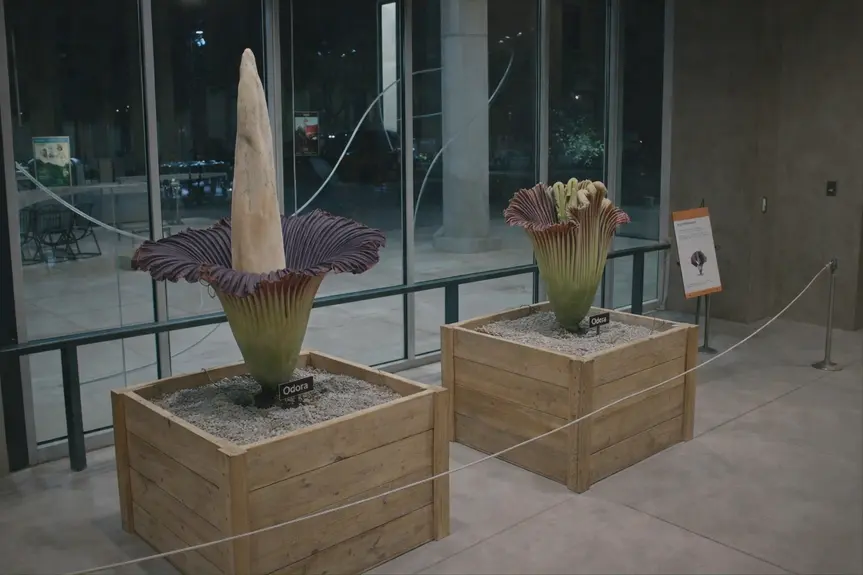
The Huntington Library and Gardens is buzzing with excitement as two corpse flowers have begun to bloom! Known for their distinct and pungent smell, Odorysseus and Odora are drawing in crowds with their unusual spectacle. Odorysseus, named after the famed Greek hero, is blooming for the first time, coinciding with the release of a major blockbuster film this week. Meanwhile, Odora makes a rare appearance, having last bloomed back in 2024.
The Peculiar Blooming Process
Odorysseus made its debut first, while Odora followed just a few hours later. Both blooms are expected to reach their peak size around 2 a.m. on Monday, and are set to last between 24 to 48 hours, showcasing one of the most fleeting wonders of the botanical world. This phenomenon is not just a visual treat; it’s a rare event, as these flowers typically bloom every two to three years.
Originally hailing from the rainforests of western Sumatra in Indonesia, the Titan Arum, a.k.a. the corpse flower, emits a strong odor aimed at attracting pollinators like carrion beetles and flies. Visitors have described the scent as comparable to rotten eggs, sweaty gym socks, and even decaying flesh—definitely not your typical flower fragrance!
The endangered species is known for its impressive growth, sometimes reaching heights of more than 12 feet, and can grow as much as six inches in a single day during peak development. The Huntington is proud to maintain one of the largest collections of Titan Arums in North America, with over 43 mature plants. Since acquiring its first specimen in 1999, the institution has displayed 29 corpse flower blooms, more than any other institution in the western United States.
To contribute to the conservation of this remarkable species, staff at The Huntington hand-pollinate the plants during their flowering period, producing seeds that are cultivated and distributed to other botanical gardens. They also share pollen and root structures with partner organizations, helping to preserve this endangered plant and lessen the impact on wild populations.