Financial Anxiety Surrounding the Games
As Los Angeles gears up to host the 2028 Olympics, a wave of concern is washing over state lawmakers. At a recent legislative hearing, doubts were expressed about the potential repercussions stemming from strained relations with the federal government, particularly in light of President Trump’s past animosity towards California.
State Senator Susan Rubio (D-Baldwin Park) raised a critical question regarding federal funding, emphasizing its importance to the success of the games. “I know we rely a lot on the federal funding. Can you assure me that we’re not going to be left in the middle of the planning carrying the bag?” she asked, seeking reassurance from Joey Freeman, vice president of state affairs for the LA28 Organizing Committee.
Federal Support and Budget Concerns
In response, Freeman assured the committee that the LA28 organizers maintain a productive relationship with the Trump administration. He highlighted their successful efforts to secure a substantial $1 billion for local and state law enforcement and an additional $94 million dedicated to transportation planning.
Despite the promises of federal financial support, concerns linger. LA28 organizers have earlier forecasted that the games could cost upwards of $7.1 billion, sourced from a combination of corporate sponsorships, ticket sales, merchandise, federal funds, and resources from the International Olympic Committee. Yet, Rubio remained apprehensive, noting the strain on state finances. “As a state, our funding is also stretched thin, and at the end of the day we don’t want to have to step in to save the Olympics,” she remarked.
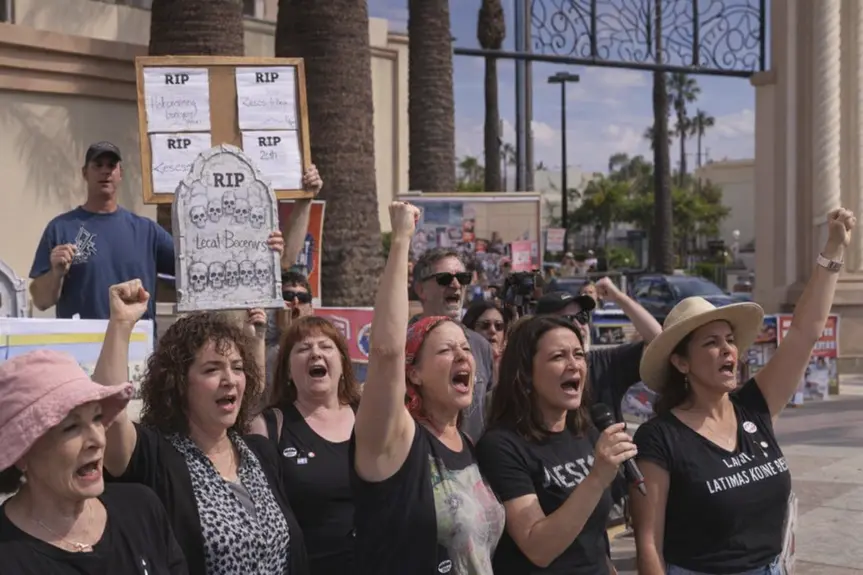
In addition to funding worries, the hearing also examined how to safeguard attendees from potential federal immigration enforcement actions during the Olympic events. The increased presence of Immigration and Customs Enforcement, alongside U.S. Border Patrol activities in the L.A. area, last year raised alarms and sparked protests focused on immigrant rights.
Senator Lena Gonzalez (D-Long Beach) stated that legislators are developing a set of bills aimed at addressing these immigration concerns during the games. “Immigration is still front and center. People are feeling even more worried that they’ll continue to be deported and kidnapped,” she commented.
Lawmakers also pressed Freeman for clarity on ticket sales protocols, particularly in relation to the alleged affordability pledge for local residents. Many potential ticket buyers were shocked to discover prices soaring into the thousands last month, raising doubts about the commitment to accessibility. Freeman admitted he lacked specifics about the community ticketing program, prompting criticism from Senator Laura Richardson (D-San Pedro). “You’re in an official state hearing and I think you know there was a problem because it was well-publicized in the news. The fact that we came to this committee and you don’t know how many tickets were issued, you don’t know how many of those were under $100 — you don’t have the information that we need,” she asserted.
Paul Krekorian, the executive director of the Los Angeles Office of Major Events, attributed many uncertainties surrounding the games to a wave of political negativity. He noted past successes of the Olympics in Los Angeles, recalling the events from 1932 and 1984 as benchmarks. “You hear the tickets are too expensive, there aren’t going to be enough opportunities, it’s going to be a big disruption, there’s going to be a lot of traffic, the city just went through these horrible fires, how are we going to pull this off?” he said. “I just want to remind all of us — L.A. knows how to do this.”