In a tragic series of events, Venezuela experienced two significant earthquakes on Wednesday evening, leading to the loss of at least 32 lives and injuring over 700, according to officials. The incident has sparked widespread panic and concern as the nation grapples with the devastation caused by the quakes, which struck shortly after 6 p.m.
Emergency Response in Action
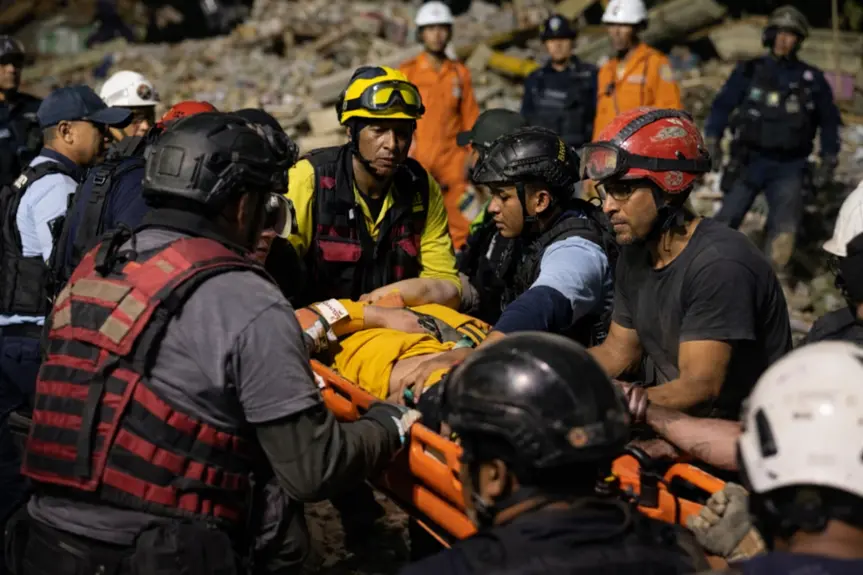
Acting President Delcy Rodríguez declared a state of emergency in the wake of the disaster, indicating that the casualty figures might rise as rescue operations are ongoing. The hardest-hit area appears to be La Guaira, described by Rodríguez as a “disaster zone.” Rescuers are working tirelessly to locate survivors amid the rubble of collapsed buildings.
Residents from the coastal state of Falcon also reported significant damages, with many people hospitalized and others trapped under debris. Video footage surfaced of children being rescued from the ruins of a building, a bittersweet reminder of the human cost of the disaster.
The earthquakes, measured at magnitudes of 7.2 and 7.5, were described as some of the strongest to hit Venezuela in over a century. Their effects were felt far beyond the epicenters, prompting evacuations in cities reaching as far as Brazil’s Amazon region, approximately 1,700 kilometers from Caracas.
International Support and Assistance
In the aftermath, offers of aid began pouring in from various countries, including Argentina, Chile, and Uruguay. The United States has also pledged to send search and rescue teams and humanitarian assistance. U.S. Secretary of State Rubio announced immediate deployment of resources to assist in the relief efforts.
Countries like Qatar, Mexico, and El Salvador have already dispatched rescue teams to help with the crisis response. This collective support reflects a hopeful global commitment to aid Venezuela during this challenging time, as leaders from around Latin America have expressed their willingness to assist.
With significant damage reported to critical infrastructure, including the closure of the Simón Bolívar International Airport and disruption of public transport, the situation remains dire. Many people are sleeping in public areas, avoiding damaged structures as authorities continue to assess the situation.
Residents experienced the quakes in real-time, with some sharing their accounts of the tremors shaking their homes. The impact of the earthquakes has left a profound mark on the nation, straining communications as cellphone services are down in parts of the country, complicating matters for families and friends trying to reconnect.
While the earthquakes have created a sense of urgency and fear, the spirit of solidarity among residents and international allies is a glimmer of hope amid the uncertainty. Authorities urge citizens to cooperate with rescue protocols and to look out for one another as Venezuela navigates this disaster.