As young great white sharks flock to the warmer waters off the Southern California coast, an alarming trend is emerging: increased fishing activity targeting these iconic predators. Eyewitnesses reveal the potential dangers not only for the sharks themselves but also for swimmers and surfers enjoying the waves.
Risks for Swimmers and Anglers
The team from Cal State Long Beach’s Shark Lab is actively monitoring the situation, particularly as fishermen cast their lines from local piers. The engagement of anglers in pursuing these great whites poses significant risks. Chris Lowe, director of the Shark Lab, highlights the severity of the situation. “If someone hooks a sizeable shark, it could pull out a significant amount of line while thrashing. This poses a lethal danger to anyone swimming or surfing nearby, as it could result in serious injuries,” he warned.
There have been past incidents, such as a notable attack in 2014 when a great white bitten a long-distance swimmer after becoming entangled in a fisherman’s line. Recently, reports have surfaced of juvenile great white sharks being hooked nearly two dozen times off the Hermosa Beach Pier, intensifying the hazards inherent to this illegal activity.
Cheyne Sullivan, an angler from Redondo Beach, admits, “I’ve never caught a great white here, but for anyone attempting to fish for them, it’s not just illegal; it’s also a challenge.” The great white is classified as a federally protected species, yet social media continues to showcase fishermen attempting to remove hooks from these magnificent creatures’ mouths, which raises concerns among local authorities.
The Importance of Reporting Illegal Fishing
Patrick Butler, Chief and Harbor Master of the Redondo Beach Fire Department, expressed his unease over the casual attitude some fishermen display while trying to catch a great white shark. If a great white is caught, protocol dictates that it should be immediately cut free from the fishing line, which brings forth additional dangers, such as potential entanglement risks for other marine life and beachgoers.
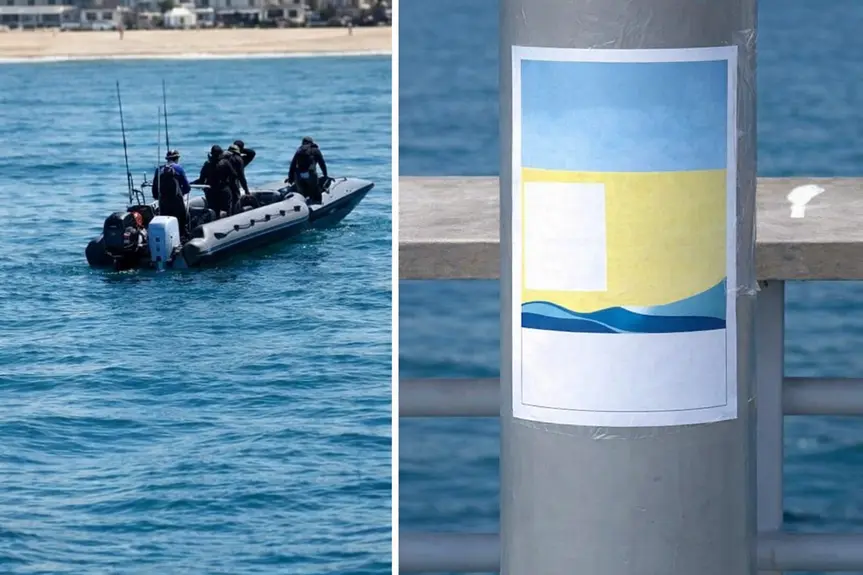
In collaboration with the L.A. County Fire Lifeguards and Redondo Beach Fire Harbor Patrol, Lowe and his team are actively searching for sharks that may have been left with hooks and lines still attached. Given the warmer water temperatures linked to the anticipated El Niño, an increase in the number of sharks in the area is likely, hence raising the chances of accidental captures.
According to Lowe, this year could see twice as many great whites compared to usual, amplifying the potential for conflict between sharks and fishermen. Attempting to fish for white sharks can lead to significant legal consequences, with offenders potentially facing fines up to $1,000 and six months in jail. Lowe strongly encourages individuals to report any suspicious activity at the piers to the state tip line at 1-888-334-CALTIP.
Recent legislation has made it illegal to target white sharks directly, including restrictions against baiting or placing targets near them. As a result, warnings have been posted along the Hermosa Beach Pier, with heightened vigilance from the California Department of Fish and Wildlife and local officials regarding the illegal fishing of these protected predators.
Butler reminds beachgoers to appreciate the beauty of these sharks from a safe distance, saying, “If you wish to witness these majestic creatures in their natural habitat, come to observe in a non-intrusive way. However, do not attempt to treat this as a competition to catch sharks.”