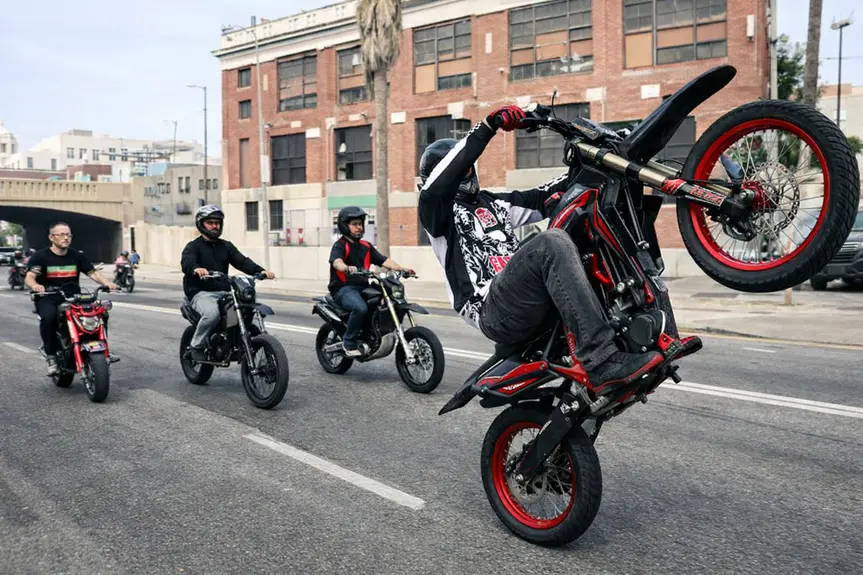
A series of unfortunate incidents involving electric bikes has ignited a heated discussion about safety and parental accountability across Southern California.
Rising Concerns and Regulatory Actions
The surge in accidents featuring high-speed e-bikes has prompted authorities to consider stricter regulations statewide. As a result, retailers are beginning to adjust their sales policies to reflect these changes, especially as prosecutors focus on holding parents accountable for their children’s actions.
Under California law, certain vehicles with two wheels are classified as e-bikes only if they stay below specific speed limits. If an e-bike goes over 20 miles per hour with just the motor or 28 miles per hour with pedal assist, it is reclassified as a moped or motorcycle. Operating these faster vehicles mandates a driver’s license, registration, and specific age requirements, which state that riders must be at least 16 years old.
Some local jurisdictions are implementing their regulations. For instance, the Long Beach City Council is drafting legislation that bans higher-powered electric bikes from using city sidewalks, citing pedestrian safety concerns. Meanwhile, the Newport Mesa School District has prohibited e-bikes for elementary and middle school students starting in the 2026-27 academic year, limiting access for all non-high school students.
Parental Responsibility Under Scrutiny
The issue of parental accountability gained particular attention following a tragic incident where a mother from Orange County faced felony involuntary manslaughter charges after her son, riding a powerful motorized cycle, fatally struck a veteran. Prosecutors argue that Tommi Jo Mejer, 51, allowed her son to operate an illegal and high-speed vehicle despite prior warnings from police.
District Attorney Todd Spitzer has referred to the increase in illegal e-bikes as a ‘pandemic,’ emphasizing the need for clearer distinctions between lighter electric bicycles and more robust motorized vehicles. This call for clarity follows a fatal hit-and-run involving an electric motorcycle operated by a 14-year-old, resulting in the death of 81-year-old Ed Ashman, a retired Marine Corps captain.
As the legal landscape evolves, questions loom regarding how courts will define the limits of parental liability regarding the purchase and unsupervised use of these costly motorized bikes.
Public safety advocates stress that vague classifications can create dangerous misunderstandings. California Attorney General Rob Bonta underscored this need for clarity, likening the current situation to other public health crises. He advocates for more awareness about the different types of e-bikes and their corresponding regulations.
With ongoing discussions about the mother’s prosecution, Bonta acknowledged the necessity for personal accountability while also advocating for preventative measures and education to foster safer practices among families.
As communities continue to adapt, expect to see educational initiatives aimed at clearly defining what constitutes a legal e-bike versus a regulated motorcycle. Law enforcement is likely to tighten the enforcement of licensing requirements for minors using these vehicles on public roads, while the ongoing legal case will set important precedents for parental accountability.
For parents and young riders, it’s vital to understand the specifications of any two-wheeled vehicle before heading out on public roads. If a vehicle exceeds 20 mph or 28 mph, ensure that the rider meets legal age requirements and possesses a valid driver’s license. Keeping up with local safety alerts is also essential for navigating changing regulations.