Universities and colleges throughout the nation, including those in Southern California, are grappling with the repercussions of a significant data breach involving Canvas, a platform widely utilized for student assignments and communication. The incident was publicly acknowledged by Instructure, the parent company of Canvas, which disclosed that a “cybersecurity incident committed by a criminal threat actor” had taken place over the weekend.
In a recent update, Instructure informed users that “Canvas, Canvas Beta, and Canvas Test are currently in maintenance mode,” with expectations to restore services soon. This breach has reportedly impacted thousands of institutions and millions of users, notably affecting the University of California and California State University campuses.
Students Voice Concerns as Finals Approach
As finals week looms, the situation has prompted concern among students, particularly at California State University, Northridge. Alfonso Vargas, a student there, expressed his worries regarding the implications of the breach on their academic responsibilities. “Frankly, it’s coming at the worst time possible,” Vargas remarked. “It’s during finals week, and teachers are just being informed. I hope deadlines can be extended; I have a term paper due, and I’m uncertain whether the teachers will have the authority to accommodate us given the circumstances.”
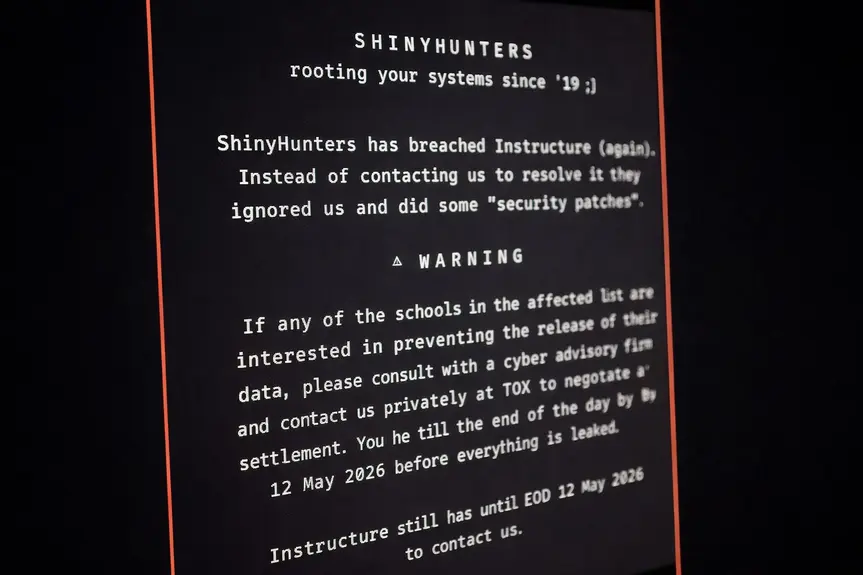
Adding to the distress, the extortion group known as “Shiny Hunters” has reportedly claimed responsibility for the attack, asserting they have obtained more than 275 million records linked to students, faculty, and staff globally. They have threatened to release vast amounts of private communication between students and educators unless a ransom is paid by May 12.
Institutional Responses and Contingency Plans
As schools navigate this crisis, officials have been relatively quiet on the full scope of the breach, but more information is anticipated as the story unfolds. Meanwhile, Glendale Community College is taking proactive measures. President Ryan Cornner shared with Eyewitness News that staff is actively working to transition coursework to alternative platforms to ensure students remain on track during this challenging period. “We actually have some backups to support these efforts,” Cornner explained. “I don’t think that’s common across all institutions, and I expect that ongoing discussions will be essential as we move forward.”