Debate Overview and Tensions Among Candidates
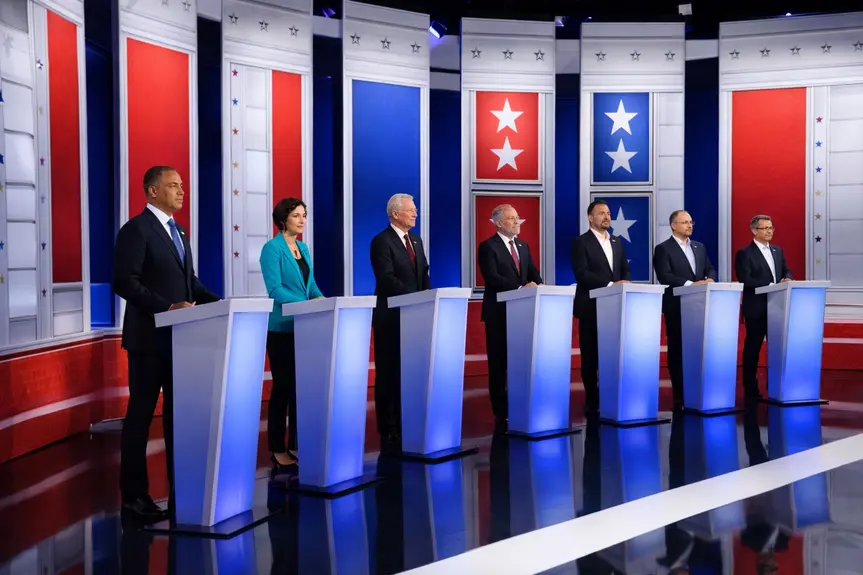
In a heated exchange that set the stage for California’s governor race, seven contenders took to the debate floor, launching pointed criticisms at one another. The televised event, which aired on CNN, unfolded just as mail-in voting commenced, making it crucial for candidates to solidify their positions before the primary election on June 2.
Key Issues Discussed: Gas Prices and Taxes
As participants delved into pressing issues, the sky-high cost of living in California emerged as a central theme, particularly gas prices, which hit an average of $6 per gallon. Candidates voiced divergent opinions on the factors contributing to these costs and proposed various solutions.
Democrats like former attorney general Xavier Becerra attributed soaring gas prices to factors beyond the state, including the influence of President Donald Trump and international conflicts. In contrast, Republicans Steve Hilton and Chad Bianco highlighted the long-standing nature of California’s expensive gas compared to other states.
Tempers flared as Hilton boldly claimed he could lower gas prices to $3 per gallon, provoking a sharp response from Democrat Matt Mahan, who accused him of misleading voters. Amidst the debates, Katie Porter, the only woman on stage, intervened to quell the escalating hostility.
This election marks a unique period in California’s political landscape, with no clear frontrunner and over fifty candidates vying for the governor’s office, following Gavin Newsom’s departure. The candidates included not only the prominent Republican figures but also a diverse array of Democrats, from retired politicians to influential philanthropists.
Trump’s name frequently surfaced during discussions, with candidates divided on how prominently to feature him in their arguments. Becerra did not hold back, labeling Trump a significant threat to California, while Porter succinctly dismissed him with a pointed remark.
Tax policy also sparked contention, with billionaire Tom Steyer proposing a one-time tax on the wealthy, which he argued would not be sufficient alone. Meanwhile, other candidates contended that the Democrats should focus on enhancing government efficiency rather than merely expanding it.
As California grapples with ongoing challenges such as homelessness, rising wildfire insurance costs, and housing affordability, the stakes in this election rise. With everyday expenses climbing, citizens are feeling the weight of increased costs for necessities like groceries and utilities.
Republicans have been vocal in their claims that the Democratic leadership is responsible for many of these pressing issues due to heavy taxation and regulatory burdens that have hindered job creation.
As the race progresses, Steyer continues to leverage his significant financial resources to flood airwaves with advertisements, though he has yet to distinguish himself from the pack. The state’s electoral format allows all candidates to compete on a single ballot, with the top two vote-getters advancing to the general election, an arrangement that has raised concerns among Democrats about the potential for a Republican sweep.
The GOP’s struggle to secure victories in statewide elections has persisted for two decades, amidst a voter base that favors registered Democrats nearly two-to-one.