In a significant decision impacting California’s higher education landscape, Governor Gavin Newsom has vetoed Assembly Bill 713, which aimed to provide paid job opportunities to undocumented students at public colleges and universities across the state. This legislation would have prohibited institutions such as the University of California (UC), California State University (CSU), and community colleges from disqualifying students based on their lack of federal work authorization.
Concerns Raised Over Federal Liability
This marks the second consecutive year in which Newsom has rejected similar efforts. In his veto statement, he expressed apprehension regarding potential legal repercussions for state employees if the bill were to be enacted. Governor Newsom emphasized his growing concerns about inadvertent consequences that might arise from the legislation, particularly against the backdrop of a federal government that he described as eager to cause disruption and confusion, especially for immigrant communities.
Historically, California has taken the lead in supporting undocumented individuals through various educational initiatives. However, recent prohibitions have made it increasingly difficult for these students to pursue their academic and professional aspirations. Following his previous veto last year, issued after the UC Board of Regents withdrew its support for similar measures, many are left disheartened by the state’s retreat from empowering undocumented students in the educational sector.
The Legal Debate Continues
The foundation of AB 713 rested on a theory posited by UCLA legal scholars, which contended that a federal statute from 1986 concerning the hiring of undocumented workers does not extend to state entities. Newsom highlighted the necessity for the federal judiciary to establish the validity of this theory before any implementation could occur, thereby raising concerns about procedural risks.
The backlash to his veto was immediate. Ahilan Arulanantham, a UCLA professor and advocate for the legislation, criticized the governor’s decision as a setback for undocumented students rather than a protective measure. He argued that the state’s failure to enact this legislation leaves universities vulnerable to legal challenges concerning their hiring practices. Both the UC and CSU systems did not formally support this year’s measure, citing fears of potential civil and criminal penalties as well as the risk of losing federal funding.
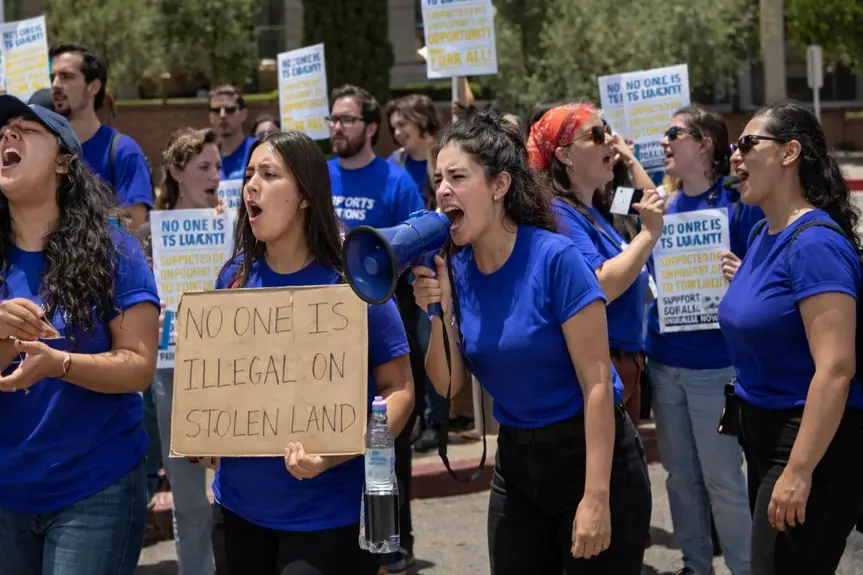
Despite the challenges, student advocacy groups, including the Cal State Student Association and the UC Student Association, voiced strong support for the bill, highlighting the essential roles these employment opportunities play in shaping the futures of undocumented students. As many as 70,000 undocumented students are enrolled in California’s community colleges alone, with thousands more attending UC and CSU campuses, some of whom are now facing an uncertain path due to inaction on this issue.
The rallying cries of advocates, including Assemblymember José Luis Solache Jr., drew attention to the pressing need for safe employment opportunities on campus, describing it as crucial for students’ career advancement. The ongoing legal and legislative struggles underscore a broader conflict between state initiatives aimed at fostering inclusivity and the stark reality of federal immigration policies that often undermine such efforts.