A significant earthquake measuring 7.7 on the Richter scale struck off the coast of Indonesia early Saturday morning, resulting in the tragic loss of at least five lives and widespread damage to buildings. The quake sent shivers through the local population, causing panic across a region that is no stranger to seismic activity.
Immediate Impact and Response
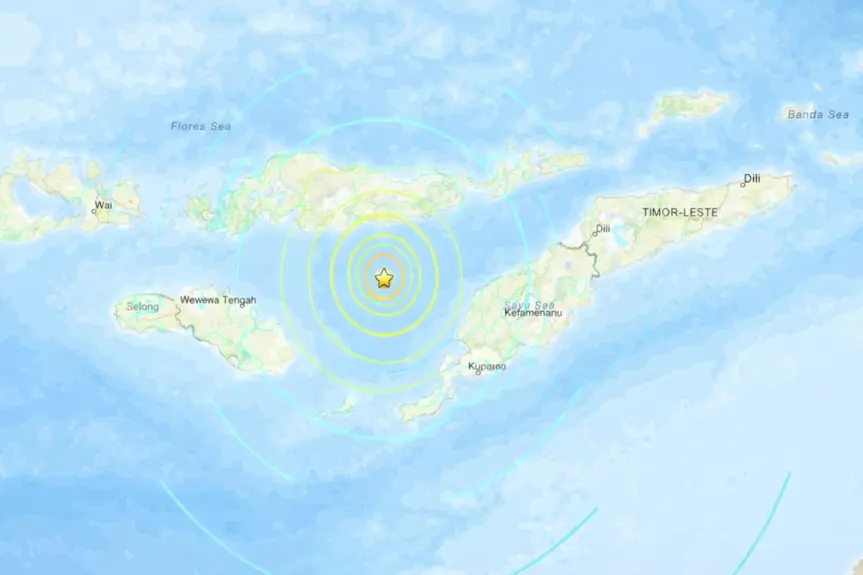
The earthquake, which occurred at 5:58 a.m. local time, had its epicenter located 68 kilometers northwest of Ende in East Nusa Tenggara province, with a depth of just 10 kilometers. Following the quake, authorities promptly issued a tsunami warning and urged residents along the coast to seek higher ground. This warning was lifted later when monitoring showed no immediate threat of significant tidal waves.
Authorities reported the bulk of fatalities occurred in Sikka and Manggarai regencies, where the collapse of structures led to casualties. Communication disruptions caused by power outages made it challenging for officials to gather complete information on the devastation and continuing rescue efforts.
Local hospitals were placed on high alert, with staff evacuating patients as a precaution and relocating essential medical equipment outdoors to ensure safety amidst fears of further aftershocks.
Ground-Level Experiences
The impact of the quake was felt throughout Flores Island, leading many residents to express their fears. Yohanna Embu, a local, recounted the chaotic scene as people rushed for safety. “Many buildings here were damaged… the waiting room at the port terminal in Maumere collapsed,” she shared.
At a local seminary in Sikka, students attending morning Mass fled in terror when the roof of an assembly hall gave way. Father Guidelbertus Tanga described the panic that ensued, mentioning that at least one priest sustained injuries after leaping from a second-floor window to escape the collapsing structure.
There were also reports of distress in Bima, a nearby city, and damage assessments began in southern Sulawesi, highlighting the widespread impact of the seismic event. Originally, authorities had warned citizens in East Nusa Tenggara, West Nusa Tenggara, and parts of Sulawesi to stay clear of coastal areas due to potential tsunami risks.
Indonesia’s geographical location, nestled on the Pacific ‘Ring of Fire,’ makes it especially vulnerable to earthquakes and volcanic eruptions. The nation has a history of deadly seismic events, including a catastrophic tsunami in 1992 that claimed around 2,500 lives on Flores and an earthquake in 2018 that resulted in over 4,400 fatalities.
Natural disasters like these serve as a somber reminder of Indonesia’s seismic challenges, a reality that resonates deeply with its inhabitants as they navigate through both fear and resilience in the face of nature’s fury.