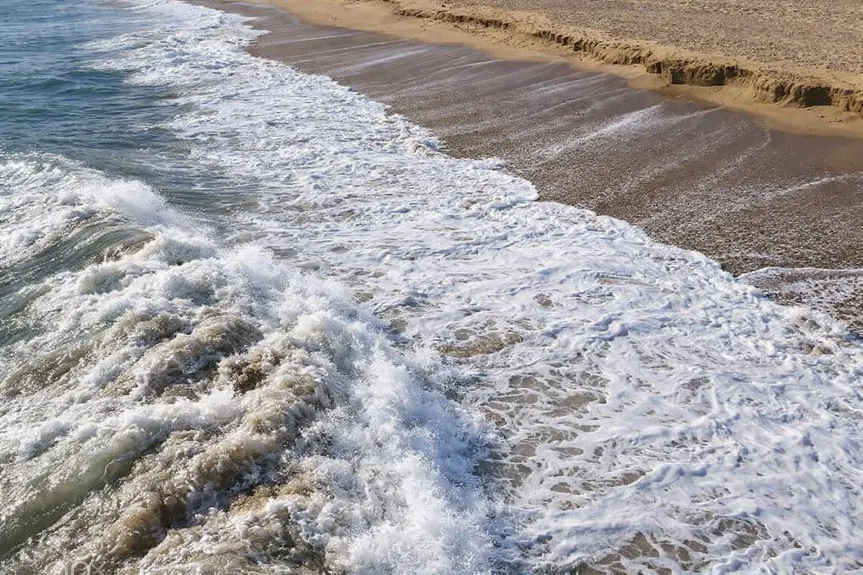
A powerful series of hurricane-driven swells has led to the emergence of long-hidden remnants of Newport Beach’s infrastructure, buried for decades beneath layers of sand and water. As these waves eroded the shoreline, a collection of rocks, concrete fragments, and rusted metal rods became visible, capturing the attention of locals and beachgoers alike.
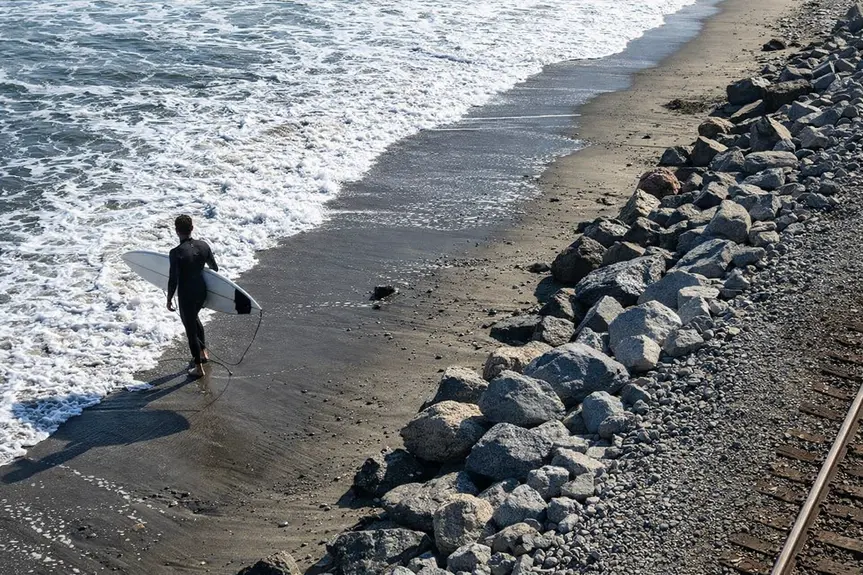
Much of this unexpected uncovering occurred near the west jetty, renowned for its surfing conditions at the popular spot known as the Wedge. Newport Beach Lifeguard Battalion Chief Adam Yacenda confirmed the presence of these remnants, acknowledging the ongoing erosion that has revealed pieces of history.
Historical Infrastructure and the Impact of Erosion
According to Yacenda, the U.S. Army Corps of Engineers constructed the jetties years ago to combat beach erosion and to protect residences near Newport Harbor. “A significant amount of sand has been stripped away, exposing items that have remained hidden for years,” he stated. Among these discoveries are PVC pipes, wires, and even railway ties nestled beneath the water’s surface.
This surge of storm activity aligns with a developing El Niño pattern, which is causing warmer ocean temperatures in the tropical Pacific and an increase in rainfall across the region. The powerful El Niño of 2015-16 was linked to severe beach erosion along California’s shores, setting a precedent for current events.
Since July, three hurricanes have formed in the central and eastern Pacific, with Hurricanes Fausto and Genevieve generating dangerous waves and strong rip currents, prompting high surf warnings for Southern California. Earlier in the month, Point Dume State Beach was closed due to substantial erosion caused by high tides, resulting in precarious drop-offs of nearly eight feet.
Curiosity and Concerns for Local Surfers
In Carlsbad, the effects of the strong surf and high tides have also been felt, stripping away sand and damaging a parking lot at Tamarack State Beach—an area that had recently received a significant infusion of sand from a nearby lagoon. Reports emerged that around 400,000 cubic yards of sand had been dredged there in early 2025.
The exposure of previously buried materials has piqued local interest, prompting discussions about what might still lie beneath the sand and raising safety concerns for surfers at the Wedge. Some residents speculate that these materials may be part of an older groin structure that preceded the existing jetty system. While jetties are typically long, rock- or concrete-based barriers built to preserve navigation channels, groins are shorter structures designed to prevent erosion and widen beach areas.
As authorities continue to assess the situation, the legacy of these decades-old infrastructure pieces now invites both curiosity and caution among Newport Beach residents and visitors alike.