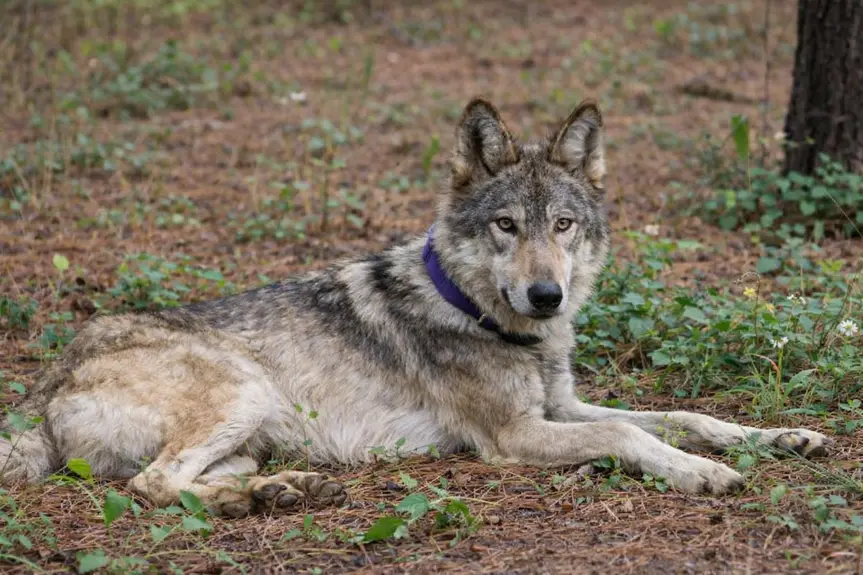
A gray wolf has been spotted in Lake County, igniting optimism among wildlife enthusiasts and conservationists about the gradual recovery of this endangered species in California. The California Department of Fish and Wildlife received reports in late August, indicating that the wolf was seen in a region where Mendocino, Glenn, and Lake counties converge.
A wolf biologist verified the authenticity of the sighting by examining photos and tracking evidence. Alicia de la Garza, deputy director of public affairs for the California agency, shared insights on the matter, saying that confirmed tracks were found near one of the reported sightings.
The Signs of Recovery
This sighting marks a crucial moment in the ongoing recovery of gray wolves in California. After nearly vanishing from the state in the 1920s, Gray wolves have slowly made a return over the past decade. The first documented sighting since their decline was of OR7, a wolf that journeyed from Oregon in 2011.
Currently, it is estimated that about 50 wolves inhabit California, according to the Department of Fish and Wildlife. Despite various factors such as hunting and agricultural practices contributing to their decline, hunting gray wolves remains illegal in the state.
Navigating Coexistence with Wolves
Wolves primarily prey on animals such as elk, deer, reptiles, and occasionally larger livestock, though such instances are rare. While wolves are protective of their territory—potentially posing a risk to pets—these creatures generally avoid human interaction. If someone encounters a wolf, the authorities recommend maintaining eye contact, making noise, and gradually retreating rather than running.
The Sacramento Bee highlighted the significance of this recent sighting in Lake County. Much of the wolf recovery has predominantly occurred east of Interstate 5, and this new presence offers a promising possibility for the species, as the ecosystem west of the area boasts more prey and suitable habitats.
Amaroq Weiss, a former senior wolf advocate at the Center for Biological Diversity, expressed the excitement within the conservation community, calling it the breakthrough they had long awaited. “To have wolves reach the west side of I-5, where we know is the best habitat in the state, is incredibly thrilling,” said Weiss.
As gray wolves continue their recovery journey in California, discussions about their protection also swirl. The White House is currently reviewing existing protections for the species, noting that any changes could impact their future stability. Under the federal Endangered Species Act, protections can be lifted if a species is deemed to have recovered, yet this matter remains contentious.
After facing extinction early last century, the presence of gray wolves in California today presents a heartening narrative of wildlife resilience and recovery, encouraging ongoing efforts to preserve their habitat and ensure their future in the Golden State.