Two Candidates, One Stage
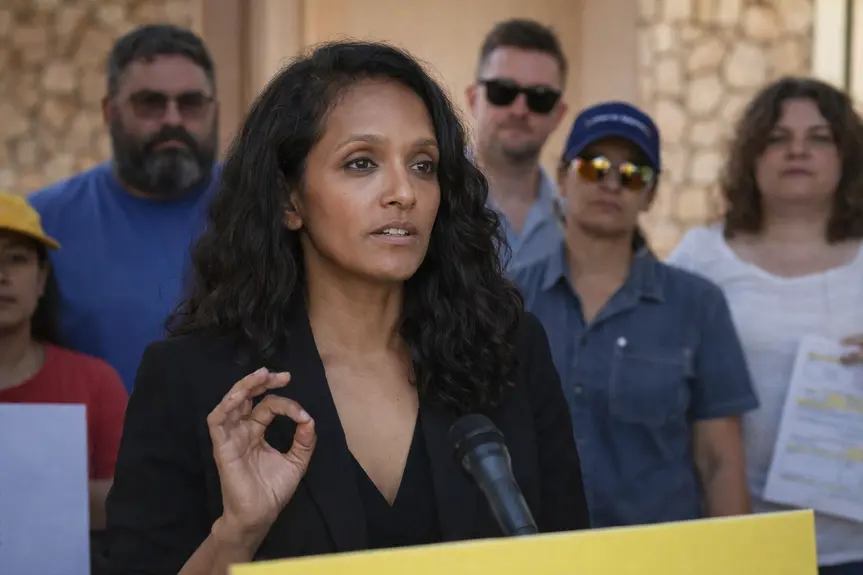
The tension was palpable as Los Angeles Mayor Karen Bass and City Councilmember Nithya Raman faced off in a heated debate, the first of its kind in the run-up to the upcoming mayoral election on November 3. The two candidates didn’t hold back, sparring over critical topics like homelessness and public safety before a live audience from the Sherman Oaks Homeowners Association.
Clashing Perspectives on Homelessness and Policing
Under the spotlight, Bass criticized Raman for her collaborative approach in the council, suggesting that Raman’s interactions with her colleagues felt more academic than practical. The mayor highlighted Raman’s absentee record, implying that it undermined her effectiveness during her tenure.
Raman, however, defended her record, pointing out that her efforts had tangibly reduced homelessness in her Hollywood Hills district, even as the overall city statistics continued to decline. “Real progress requires hard work, action, and exemplary leadership,” Raman stated, emphasizing the need for better management and oversight in City Hall.
Bass countered Raman’s claims, crediting her own Inside Safe initiative, which has successfully sheltered over 6,200 homeless individuals, as a significant reason behind Raman’s localized success. The debate intensified as Bass accused Raman of poor leadership, specifically citing canceled committee meetings that compromised productive dialogue about homelessness.
Financially speaking, Bass led the fundraising race as the recent reports showed her amassing over $510,000, while Raman raised just above $170,000 during the same period. This financial advantage, coupled with the accountability issues highlighted during their exchanges, threatened Raman’s challenge to Bass’s incumbency.
As the evening progressed, interruptions became a hallmark of the debate. Raman admonished Bass for not allowing her ample opportunity to respond, while Bass insisted her perspective deserved recognition. This pattern underscored the passionate yet contentious atmosphere between the candidates.
The debate didn’t shy away from contentious issues like police funding. Raman criticized Bass for agreeing to costly salary increases for police personnel that, according to her, hampered the city’s budget for essential services such as street repairs. Despite these raises, Raman noted the LAPD’s struggles to recruit and retain officers, calling into question Bass’s promises of reform.
In response, Bass defended the pay increases, framing them as necessary to prevent a mass exodus of officers to other law enforcement opportunities. “To criticize the police hiring process is a bit hypocritical coming from you,” she asserted, challenging Raman’s previous voting record on these issues.
Their exchanges conveyed not only their contrasting approaches but also personal attacks regarding responsiveness and constituent relations. While Bass claimed that Raman’s office failed to address community concerns effectively, Raman pointed out that voter dissatisfaction was evident, with many constituents feeling the impact of service reductions under Bass’s administration.
As the debate neared its conclusion, candidates also addressed questions regarding their past affiliations with various consultants, revealing a shared commitment to transparency but contrasting in approach. Both candidates took the time to clarify their associations, showing the stakes involved in the race ahead.
Once political allies, Bass and Raman’s relationship has transformed into a fierce contest, as they both seek to position themselves as the candidate best equipped to tackle the urgent issues facing Los Angeles. The debate not only served as a platform for conflict but highlighted the dire choices facing voters in the rapidly approaching election.