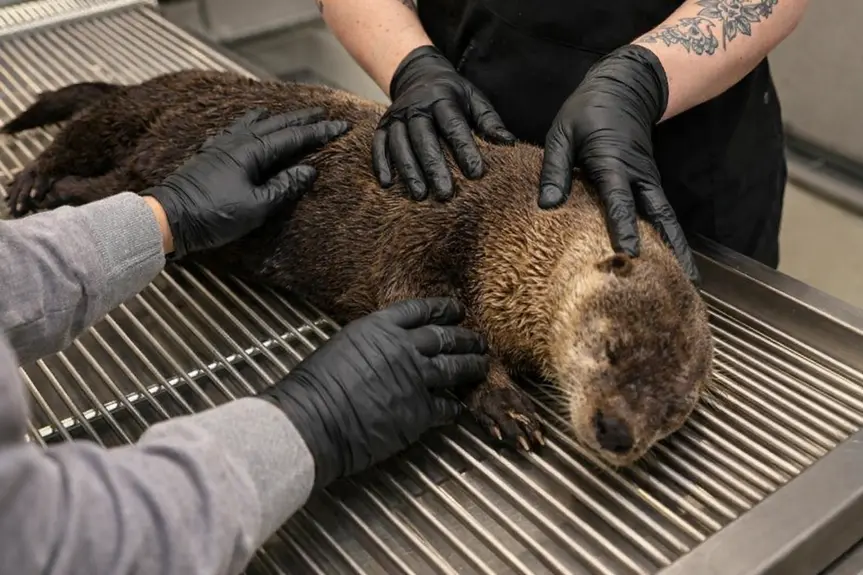
A river otter is on the mend at a wildlife rehabilitation center after a hit-and-run incident left it injured. The young male otter was brought in on Friday morning, following a strike by a car in Vacaville. Fortunately, the otter, weighing in at 15.5 pounds, did not sustain any broken bones. However, he did receive an abrasion on his chin and swelling around his brain, according to Amy Pedrioli, founder of the Solano Wildlife Rescue & Education Center.
Prognosis and Care at the Center
The veterinary team at the center is optimistic about the otter’s recovery, predicting a potential release back into the wild in about a week to ten days. Currently, he is being administered pain medications and will need to be off the meds for at least 72 hours before he can be considered for release. Additionally, the otter needs to exhibit natural behaviors typical for a river otter, including aggression and the ability to feed independently. “He needs to show us that he can eat and be an otter before we can let him go,” Pedrioli noted.
This particular incident marks a first for the wildlife center as it has never before received a live river otter. Although they have encountered deceased otters in the past, this young river otter is their first chance to rehabilitate one back to health. Pedrioli explained that the road where the otter was struck crosses several waterways common for these animals.
Understanding River Otters
River otters are fascinating creatures, often residing in rivers, lakes, and marshes across California. They typically measure up to four feet in length and can weigh as much as 32 pounds. These playful mammals feed on a varied diet of crustaceans, fish, and birds. It’s essential to recognize the difference between river otters and their oceanic cousins, sea otters, which can reach up to five feet and weigh nearly 100 pounds.
Historically, river otters faced significant threats due to overhunting for their pelts during the 17th and 18th centuries. Nowadays, their greatest challenges come from habitat encroachment by humans. In California, the largest populations can be found in the Suisun Marsh, just south of Vacaville. Known for their nocturnal activity, these otters often cover extensive distances traveling between their aquatic habitats.