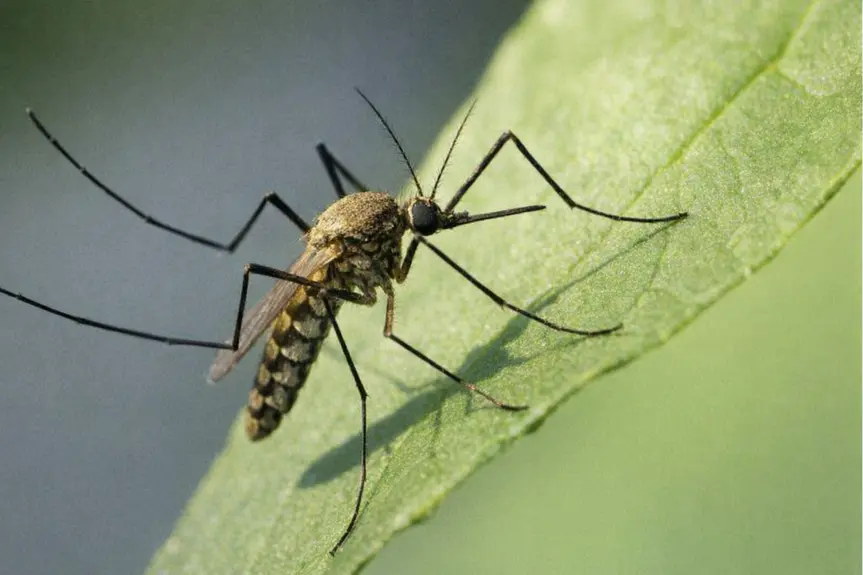
Recently, California has faced a worrying increase in mosquito activity following an unseasonably warm winter and a scorching heat wave in March. This rise in mosquito populations has led to a significant spike in West Nile virus cases, hitting a five-year high across the state.
Record Numbers and a Heartbreaking Loss
As of last week, the California Department of Public Health reported a total of 30 human cases of the West Nile virus, along with three fatalities. This past Thursday, L.A. County confirmed its first death from the virus for the year, involving a resident from the San Fernando Valley who succumbed to severe neurological complications following the infection. To date, L.A. County has recorded 15 infections in the area, with half of them occurring in the San Fernando Valley.
Dr. Muntu Davis, the L.A. County Health Officer, expressed condolences to the family affected by this tragedy, emphasizing the serious dangers posed by mosquito-borne diseases such as West Nile and dengue. He urged residents to adopt preventive measures, including using insect repellent containing DEET, eliminating standing water around properties, and securing windows and doors with tight-fitting screens. “Small actions can make a significant difference in preventing illness,” he noted.
Climate Impact and Public Health Concerns
Experts are increasingly noting a trend of rising vector-borne diseases. West Nile virus, which thrives in birds and is transmitted to humans via mosquito bites, is showing disturbing levels this season. The typical peak for mosquito activity spans from June to November, but this year has seen an earlier emergence due to record-breaking winter temperatures.
According to Susanne Kluh, general manager of the Greater Los Angeles County Vector Control District, heightened climate conditions have sped up the cycle of West Nile virus detection in L.A. County, leading to alarming widespread activity. Epidemiologist Matt Willis warned that global temperature rises could lead to further increases in such diseases, as warmer climates push pathogens and insects northward into areas that were previously unaffected.
Current data shows that approximately 24% of dead birds tested this year are positive for West Nile virus, a significant jump from the five-year average of 13%. Moreover, around 8 out of every 1,000 mosquitoes are testing positive, up from an average of 5 in previous years.
While many infected individuals remain asymptomatic, about one in five will experience moderate symptoms such as fever, body aches, vomiting, or diarrhea. However, the most severe cases occur in roughly one in 150 infections, potentially leading to serious conditions like meningitis and encephalitis. Vulnerable populations, including older adults and those with compromised immune systems, are at the highest risk. There are currently no specific treatments or vaccines available, and health officials are advising caution during peak mosquito activity hours, especially at dawn and dusk.
Dr. Erica Pan, the State Health Officer, reinforced the potential lethality of the West Nile virus for those who are elderly or immunocompromised, and urged all Californians to take extra precautions, especially during August and September, when transmission rates typically peak.