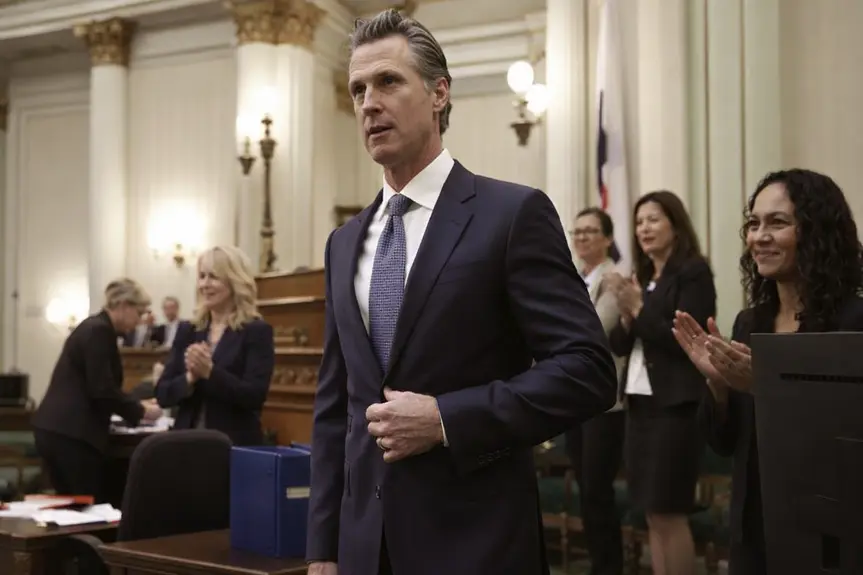
Governor Gavin Newsom has officially signed his final state budget, marking a significant milestone with a whopping $351.7 billion spending plan designed to support the state’s most vulnerable communities. Aiming to bolster those in need, this budget leans heavily on tax revenues derived from the stock market, particularly gains associated with artificial intelligence.
In a recent video address, Newsom highlighted some of the notable achievements during his administration, including the implementation of free meals at schools, universal transitional kindergarten, and the introduction of 130,000 subsidized childcare slots. He reflected on a transformative era in California, characterized by unprecedented governmental expansion and a significant budget increase exceeding $100 billion.
Newsom proudly declared, “Over the past eight years, we’ve built remarkable initiatives for California residents – among the most audacious measures any government has undertaken in generations. And remarkably, we did this without jeopardizing our fiscal stability. It was a deliberate choice.”
Budget Breakdown and Legislative Dynamics
Following extensive lobbying and negotiations at the state Capitol, the budget was finalized, with its passage benefitting from the supermajority of Democrats who hold the majority of both the Senate and Assembly. This budget is the fruit of labor from multiple legislative hearings and discussions, resulting in a complex coordinated effort among various stakeholders.
Senate President Pro Tem Monique Limón and Assembly Speaker Robert Rivas spearheaded the discussions with Governor Newsom, ultimately shaping the final contours of the budget. Most negotiation efforts are typically navigated by the staff members from these leadership roles.
Throughout this process, union representatives advocating for better working conditions and increased wages, along with business groups striving against new regulations, played pivotal roles in shaping various agreements.
The nonpartisan Legislative Analyst’s Office (LAO) recently highlighted a 70% surge in state spending since Newsom took office, primarily driven by a 60% hike in revenue. Yet, there are concerns regarding the sustainability of this financial model. The LAO emphasized that California might not sustain existing programs moving forward unless a more balanced spending approach is adopted.
Education and Medi-Cal: Major Budget Priorities
The lion’s share of California’s budget is allocated to education and Medi-Cal, the state’s health insurance program catering to low-income residents, which serves approximately one-third of California’s population. Next year, an estimated $50 billion from the general fund is earmarked for Medi-Cal, amidst a total projected expenditure exceeding $220 billion when accounting for federal contributions.
Medi-Cal, which accounts for around 40% of total state spending, has seen costs more than double over the last decade, driven by an increase in enrollment and healthcare costs—a trend the LAO attributes in part to a growing number of seniors seeking care.
Under Newsom’s leadership, Medi-Cal has been expanded to encompass all immigrants, regardless of status, dramatically reducing the uninsured rate in California to 5.9%. However, the rising costs of this program have prompted discussions of potential spending cuts and changes in asset limits for eligibility.
On the education front, the budget ups funding through the Local Control Funding Formula by $2.2 billion, ensures a historic per pupil spending rate of $21,148, and boosts support for special education. The California Community Schools Partnership Program will also see increased investment, alongside a major focus on ensuring free meals for schoolchildren.
This budget encapsulates both progressive social initiatives and complex financial strategies, as California endeavors to navigate its fiscal future while addressing the needs of its diverse population.